Conversion guide
Stopping container condensation
Container rain is not a fault in the container. It is physics, and the fix is in how the unit is set up rather than which one you bought.
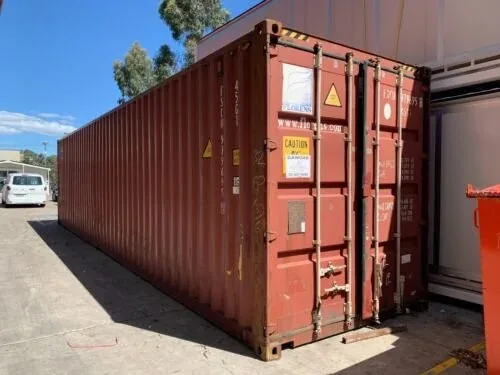
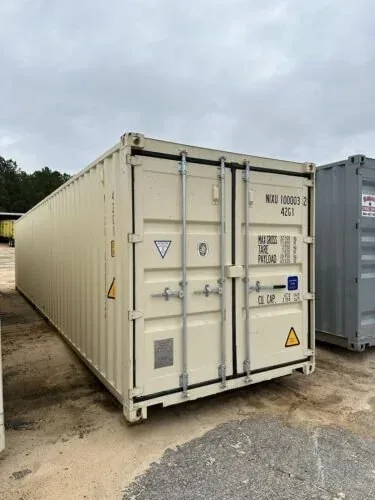
Why containers sweat
Warm, moist air inside the container meets cooler steel and the moisture condenses out onto it. In a sealed unit overnight that happens on the ceiling and walls and then drips onto whatever is stored below. People call it container rain. It is the thin steel shell behaving exactly as physics says it should, and no container is immune to it.
Humidity makes it worse
The more moisture in the air, the more there is to condense. Queensland, the Northern Territory and the coastal strip generally give the steel plenty to work with, and a sealed container in a Brisbane summer will produce startling amounts of water. Cold climates like Canberra get it too, driven by the temperature difference rather than the humidity.
Ventilation for storage units
For a storage container the cheapest effective answer is airflow. Passive vents let humid air move through instead of sitting against cold steel, and they cost very little. Add to that: keep stored goods raised off the floor on pallets or racking, leave space between the contents and the walls, and use desiccant for anything valuable or moisture-sensitive. That combination handles most storage situations.
Insulation for occupied units
Ventilation alone is not enough once a unit is occupied or used as a workshop, because people and equipment generate moisture continuously. The principle is to stop humid interior air ever reaching the cold steel. Closed-cell spray foam applied directly to the inside of the shell does this well, insulating and acting as its own vapour control with no gap for air to circulate in.
Why a partial job is worse than none
Batt insulation in a stud frame can work, but only with a properly detailed vapour control layer on the warm side and no air paths around it. Where air can get behind the insulation to the steel, condensation forms out of sight and stays there. A partial or poorly detailed job does not remove the problem — it hides it somewhere you will not find until there is damage.
Thermal bridges
Corrugations, corner posts and any steel framing added during a modification conduct heat straight through the insulation. Those cold lines are where condensation and mould appear first, usually at junctions and around openings. Continuous insulation across the inside face, rather than packed between steel members, is what controls it.
Heat as well as moisture
In most of Australia the heat is as much of a problem as the condensation. An uninsulated container in summer sun becomes an oven, which ruins batteries, adhesives, coatings and electronics. Insulation addresses both problems at once, and a light roof coating plus shade over the unit helps more than people expect.
Get the sequence right
For a conversion: structural modifications and openings first, then insulation, then services, then interior finishes. Adding insulation around services already installed leaves gaps, and gaps are where condensation starts. Settle the whole specification before fabrication rather than deciding as you go.
In stock — buy now
Ready to buy now
Real units from the Steel Box yard — delivered free, Australia-wide.
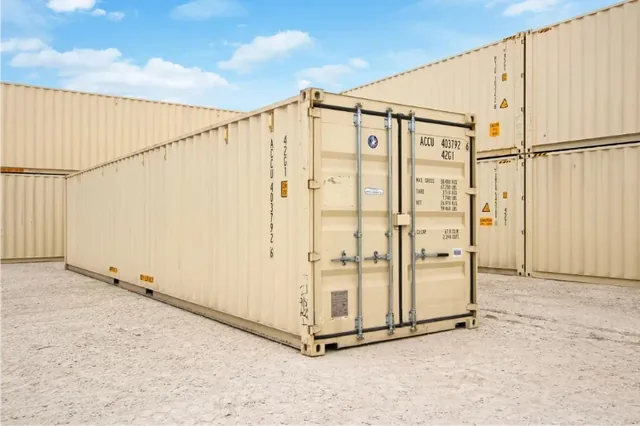
40ft Shipping Containers
40ft New One-Trip Standard Shipping Container – Beige
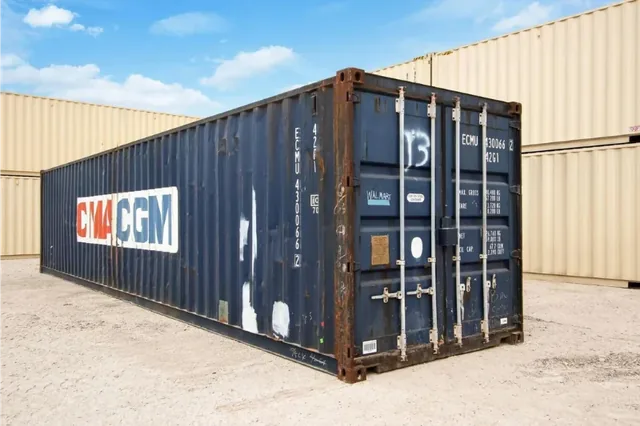 Used
40ft Shipping Containers
40ft Used Standard Shipping Container – Wind and Watertight – Navy Blue
40ft Shipping Containers
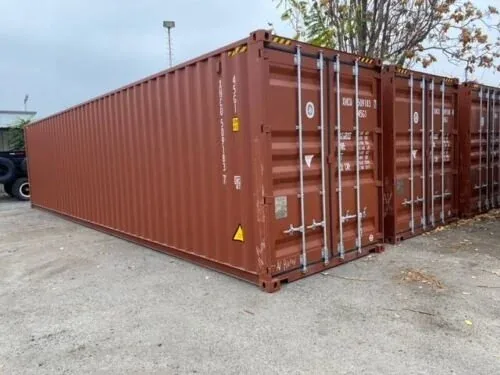
40ft High Cube One-Trip Shipping Container
 Used
40ft Shipping Containers
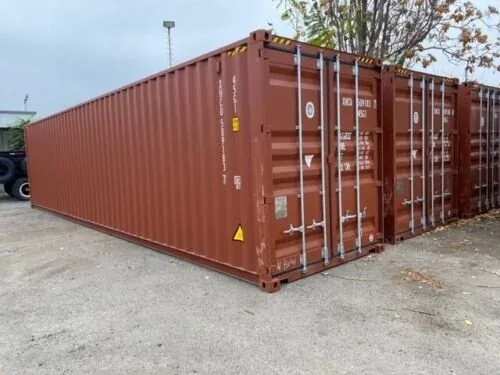
40ft High Cube Used Shipping Container – Wind & Watertight
Common questions
Why does my container drip inside?
Warm moist air meets cooler steel and condenses. It is normal physics for a thin steel shell, not a defect. Ventilation and insulation address it.
Do vents fix condensation?
For storage, passive vents plus raising goods off the floor and leaving space at the walls handles most situations. Occupied units need insulation as well.
What insulation works best?
Closed-cell spray foam applied directly to the inside of the shell insulates and acts as its own vapour control, leaving no air path to the steel.
Can I just insulate part of it?
A partial or poorly detailed job can be worse than none, because condensation forms out of sight behind the insulation and stays there.
More from the Steel Box yard
 Used
40ft Shipping Containers
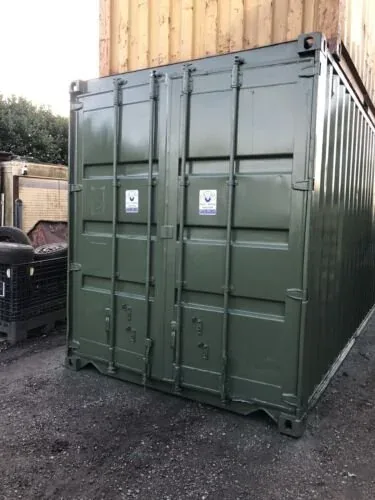
40ft High Cube Shipping Container – Used, Wind & Watertight
40ft Shipping Containers
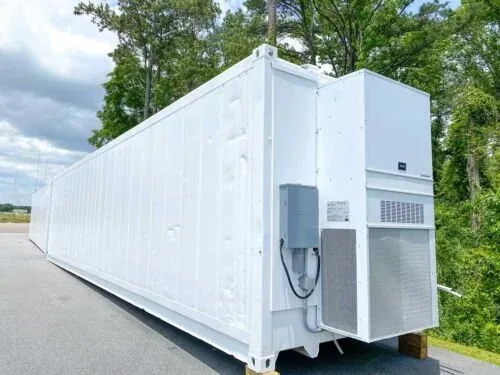
40ft High Cube Insulated Shipping Container With 5 Ton Bard HVAC Unit
 Used
40ft Shipping Containers
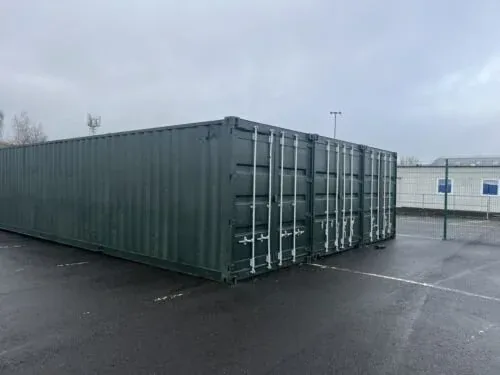
40ft Used High Cube Shipping Containers – Wind and Watertight – Dark Green
 Used
40ft Shipping Containers
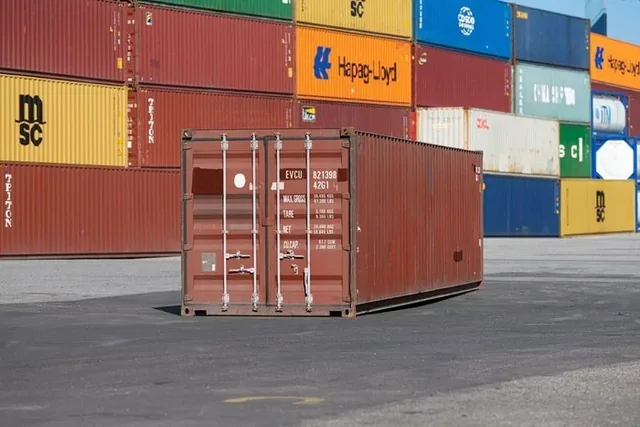
40ft Used Wind and Watertight Shipping Container – Red
Talk to Steel Box Trailers
Ready when you are.
Tell us what the unit is for and we will specify the ventilation or insulation it needs.