Delivery guide
Tilt-tray or side-loader: which truck your site can take
Almost every delivery problem traces back to the same thing: nobody measured the approach. Here is what each truck needs.
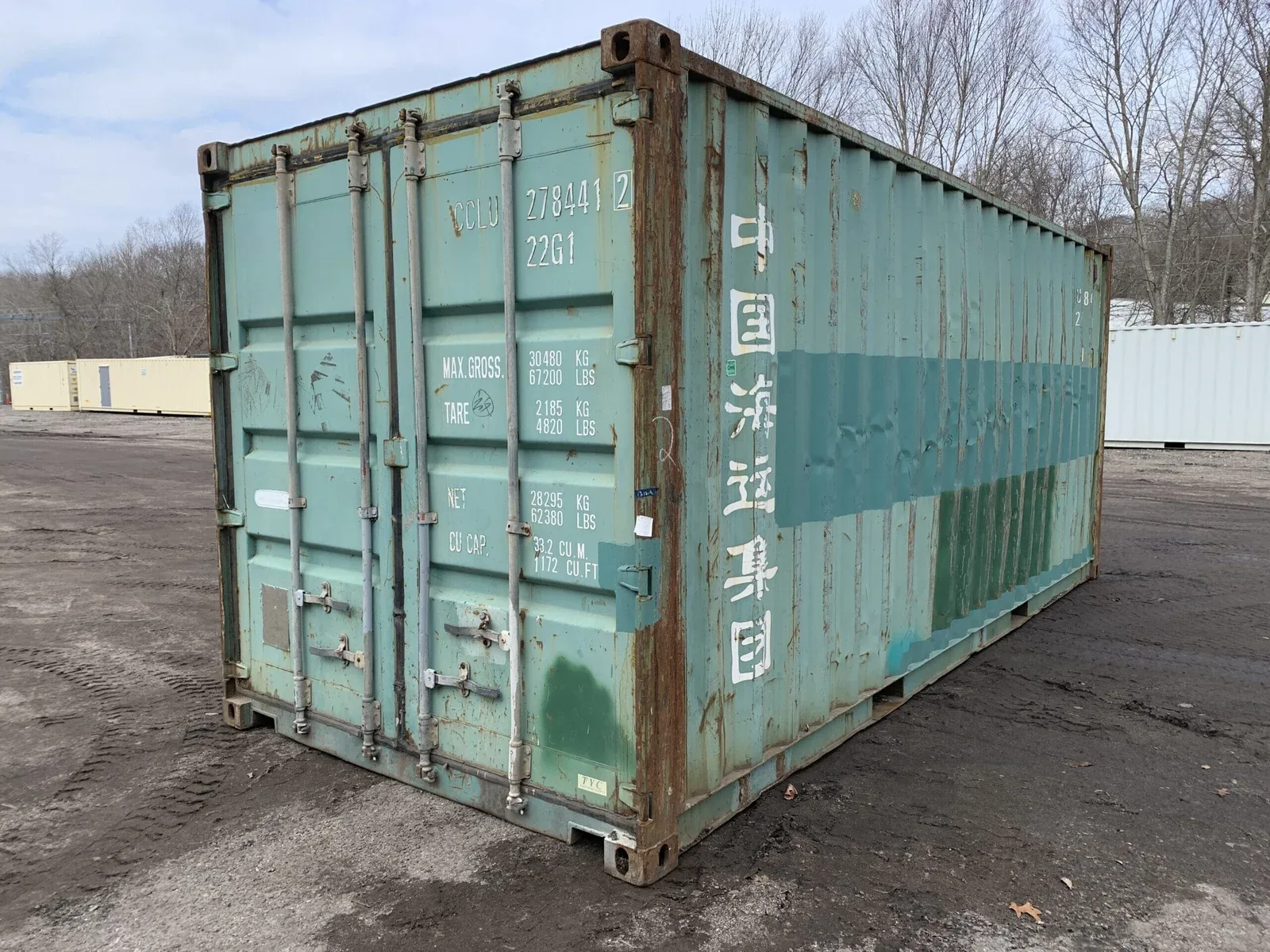 20ft x 8ft x 8.5ft Used Shipping Container – Sold As Is, Door Seals Show Light – Green — tap to view
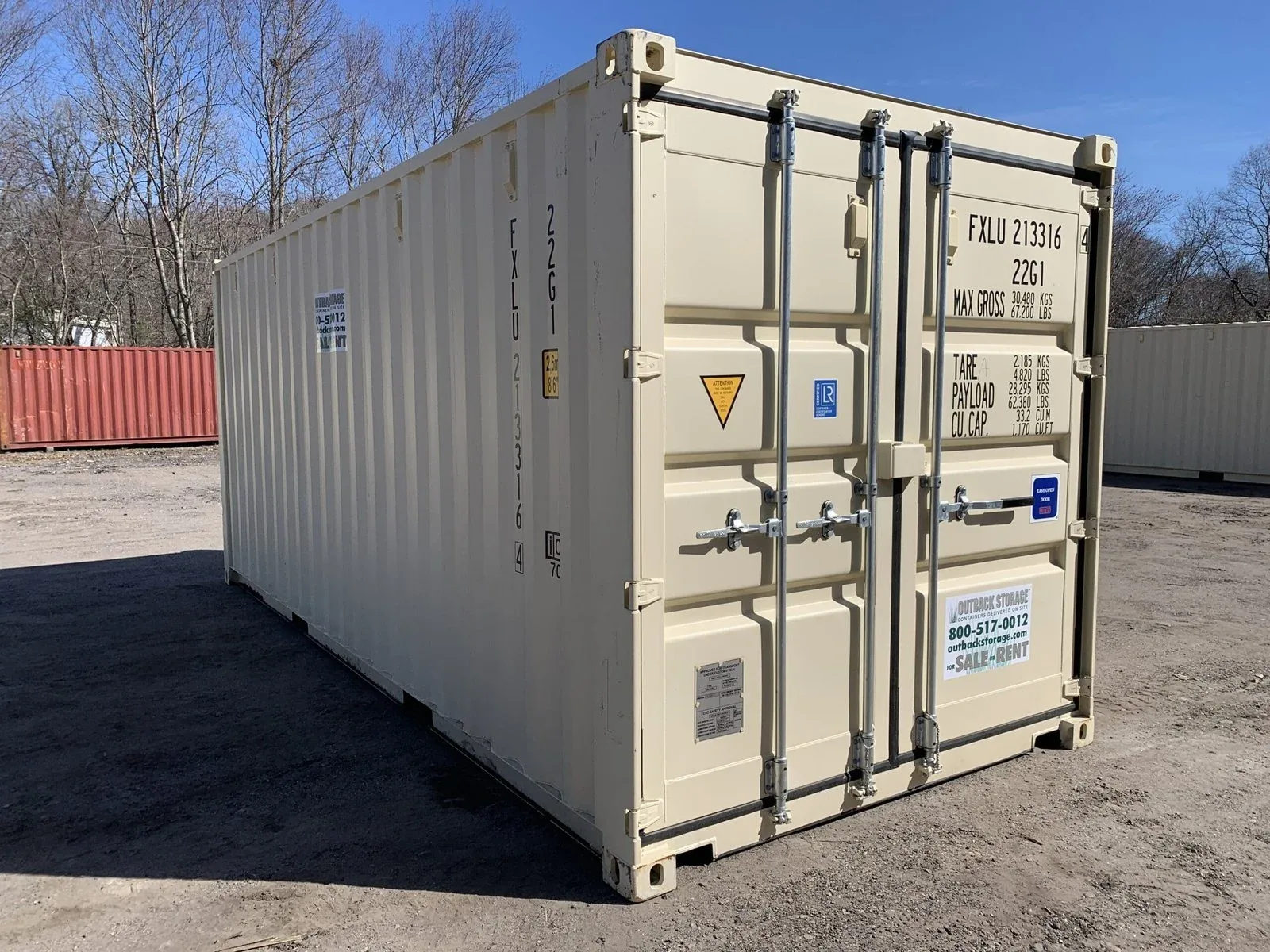 20ft x 8ft x 8.5ft Tall – New Shipping/Storage Container – Wind and Watertight – Beige — tap to view
The tilt-tray
A tilt-tray is the standard container delivery. The tray tilts back, the container slides off the rear onto the ground, and the truck drives forward out from under it. It is quick, it is the cheapest method, and it places the container accurately along one axis — where the truck can get the room.
How much room a tilt-tray needs
As a working rule, a tilt-tray needs roughly twice the container length in straight, clear space, plus room to manoeuvre into position. For a 20ft container that means about 12 metres of straight run; for a 40ft unit, closer to 25 metres. It also needs ground that is reasonably level and firm enough to carry a loaded truck, and clear height for the tray to tilt — which is often more than people expect, so watch for wires and branches.
The side-loader
A side-loader carries its own crane gear and lifts the container off the side of the truck, setting it down alongside. It needs a clear strip beside the drop point rather than a long run behind it, which makes it the answer for narrow blocks, laneways, tight yards and anywhere a tilt-tray cannot get the straight clearance. It can also stack and retrieve, which matters if the unit will be moved later.
When you need a crane
When the container has to clear something — a fence, a wall, a house, a level change — neither truck will do it and you need a crane. It is the most expensive option and it is quoted separately, but on a tight urban block or a canal-front property it is often the only way the unit gets where you want it. A crane needs a clear lift path and stable set-up ground, and it has to be coordinated with the delivery truck on the day.
How to assess your own site
Walk the route the truck will take, from the street to the drop point, with a tape measure. Record the gate width, the narrowest point, the turning room, the surface and the gradient. Look up for wires, branches, eaves and awnings. Then photograph it — the straight run behind the drop point, the gate, the approach from the street and anything overhead. Those photos answer more questions than any description.
Ground that will carry the truck
A loaded delivery truck is heavy. Lawn, sand, soft fill and gravel drives that carry a ute all year may not carry it, particularly after rain. If the approach softens in wet weather, either schedule around it or choose a drop point closer to firm ground. A bogged truck is a long, expensive afternoon for everybody.
What to tell us when you order
The delivery address, the drop point, the gate width, the surface, the gradient, anything overhead, and whether the site is accessible to a heavy vehicle in wet weather. If a permit is needed to occupy the street, say who is arranging it. That information is what turns a delivery from a hope into a booking.
In stock — buy now
Ready to buy now
Real units from the Steel Box yard — delivered free, Australia-wide.
20ft Shipping Containers
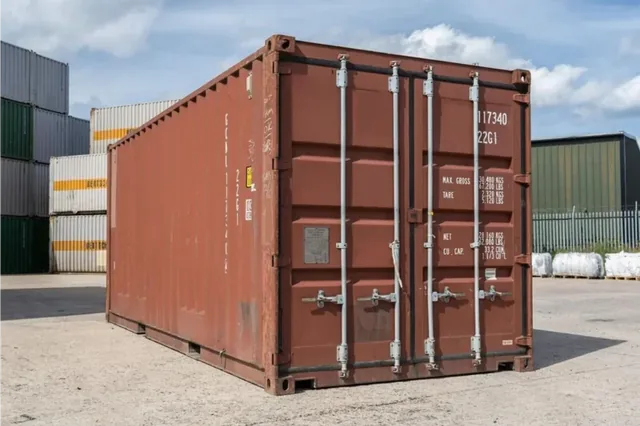
20ft Standard Wind & Watertight Shipping Container – Brick Red
20ft Shipping Containers
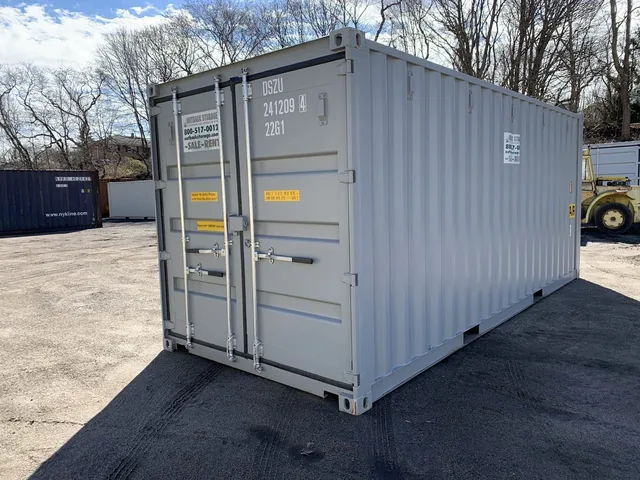
20ft Grey "Tunnel" Container – New One-Trip – Double Doors Both Ends
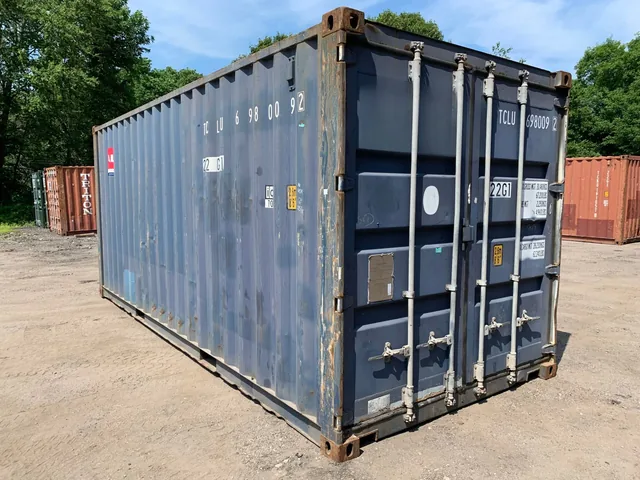 Used
20ft Shipping Containers
Blue 20ft Used Shipping Container – Wind & Watertight
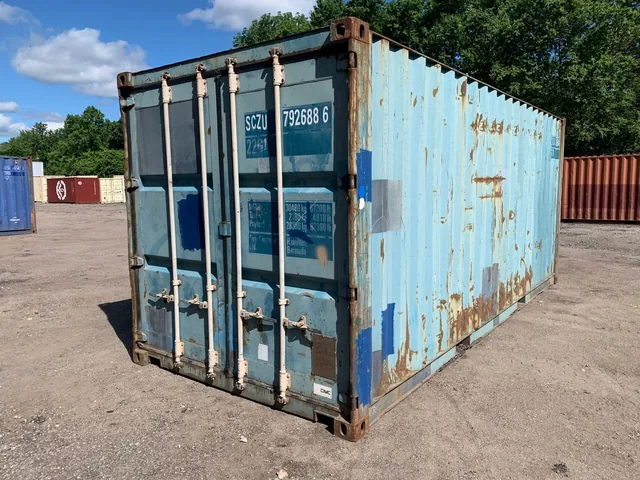 Used
20ft Shipping Containers
20ft x 8ft x 8.5ft Tall – Used Shipping / Storage Container-Wind and Watertight – Blue
Common questions
How much space does a tilt-tray need?
Roughly twice the container length in straight clear space, plus manoeuvring room — about 12 metres for a 20ft unit and around 25 metres for a 40ft. It also needs firm, reasonably level ground and clear height overhead.
What if my block is too narrow?
A side-loader needs a clear strip beside the drop point rather than a long run behind it, which suits narrow blocks. Where the unit must clear a fence or building, a crane is required.
Can a container be delivered onto a slope?
A tilt-tray needs reasonably level ground to slide the unit onto and cannot place safely on a steep driveway. A side-loader or crane is usually the answer.
Who arranges a street permit?
You or your builder, before the delivery is booked, where the council requires one to occupy the street during the delivery.
More from the Steel Box yard
 Used
20ft Shipping Containers
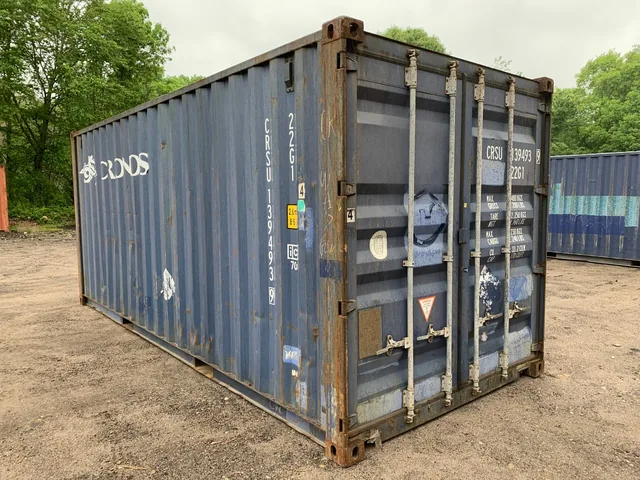
20ft Used Shipping Container – Blue – Wind & Watertight 8.5ft Tall
 Used
20ft Shipping Containers
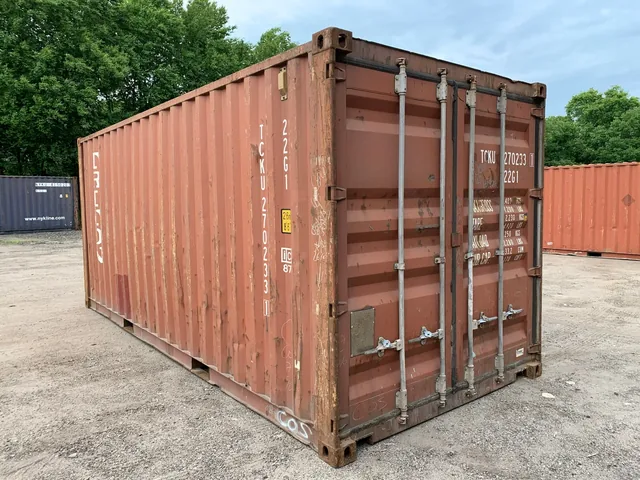
20ft Used Shipping Container — Wind & Watertight — Brick Red
 Used
20ft Shipping Containers
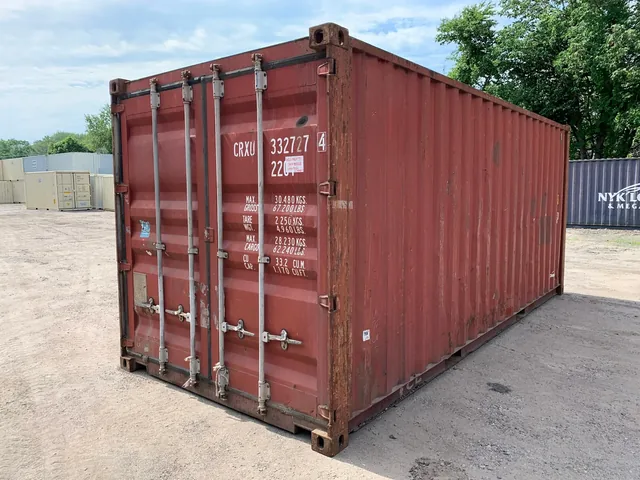
20ft Used Shipping Container – Brick Red – Wind & Watertight 8.5ft Tall
 Used
20ft Shipping Containers
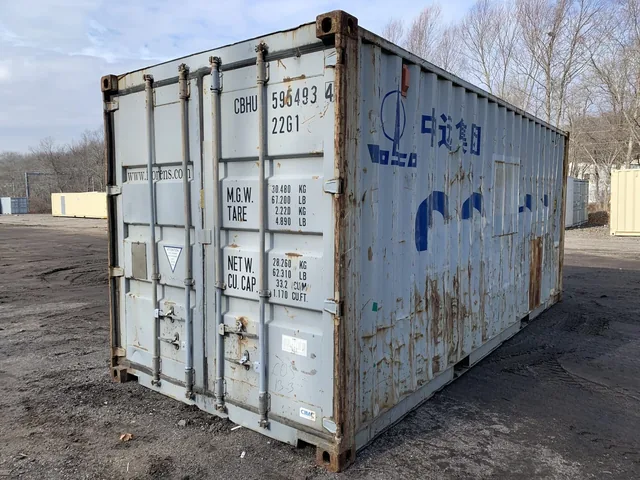
20ft Used Shipping Container — AS IS (Grey)
Talk to Steel Box Trailers
Ready when you are.
Send photos of your access and we will tell you which truck suits the site.