What a container gets used for on the border
The work splits along the river. Albury is the service town for the Riverina — grazing, cropping, and the machinery and fencing gear that goes with both. Wodonga is the base for North East Victoria — vineyards around Rutherglen and Beechworth, cattle, and a lot of small blocks on the fringe at Baranduda, Leneva and West Wodonga.
- Farms and vineyards out through Jindera, Howlong, Table Top, Barnawartha and Chiltern — drench, fencing wire, posts, spares and the tractor's implements kept dry and locked instead of under a tarp that shreds by February.
- Tradies working the new estates at Thurgoona, Leneva and Baranduda, and the older streets closer in — tools, scaffold, timber and materials locked up on site or behind the yard.
- Households using it as the shed the block never got, or storing the overflow through a renovation, a move or a deceased estate.
- Small business stock that has outgrown the back room — and for the wine and produce side, a reefer where the goods need to stay cold rather than just dry.
If the job is people rather than gear — a site office, crib room or toilet block for a build — our site cabins are the better fit. Those come on a flat-top and get placed by crane or Hiab rather than slid off a tilt-tray.
The Hume Freeway run from Melbourne
The container comes up the Hume Freeway (M31) out of Melbourne through Craigieburn, Wallan, Seymour, Euroa, Benalla and Wangaratta, then Chiltern and into Wodonga, and across the Murray into Albury. It is about 307 km and roughly three and a half hours by car; a truck with a container on the deck takes its own time. The good part is that it is divided freeway the whole way, so there is no single-lane range to crawl up with a loaded trailer.
Timing works in two stages. We dispatch 2–5 business days after payment clears, then Albury-Wodonga sits in the published 4–10 business day transit window — that is the regional window, for both the NSW and the Victorian side, and it applies even though the drop is only 300 km up the road. Allow a fortnight to three weeks from payment to the box sitting on your pad, and tell us early if it has to be there by a set day: a drop needing a crane or a traffic escort booked is slower than a plain kerbside set-down.
Two councils, two sets of rules
This is the local catch. Albury is in NSW and Wodonga is in Victoria, and the Murray between them is a state border, not just a river. That means a container on a block in Thurgoona is dealt with under the NSW planning system by Albury City Council, and one a few kilometres away in Baranduda is dealt with under the Victorian planning scheme by the City of Wodonga. They are different instruments with different language and different triggers, so approval on one side tells you nothing about the other.
Storage on your own land is a different question to a container being lived in, used as a permanent shed, or parked on a street for a year. If it is anything other than temporary storage, ask the council that actually covers the address before you order — and get the address right, because 'Albury-Wodonga' covers two of them. Council approval for shipping containers sets out what usually gets asked on both sides of a border.
Which truck gets in — town block or farm gate
Two very different delivery jobs sit inside the same ten kilometres here.
- Town and the new estates — Thurgoona, Leneva, Baranduda, West Wodonga, and the older grid around central Albury, North Albury and Lavington. New estates have wide roads but tight driveways and fresh landscaping; the older streets have narrow lanes, street trees and overhead lines.
- Rural blocks and farm gates — out at Jindera, Howlong, Table Top, Barnawartha, Chiltern, Corowa. These are easier on width and harder on surface: gravel driveways, gates narrower than they look, soft ground after rain, and a low branch somewhere along the run.
Tilt-tray is the usual choice. It tips the container off the back and drives out from under it, so it needs roughly twice the container's length in straight, clear, level space — a 20 ft wants about 12 m of run plus room to turn around. Side-loader sets the unit down beside the truck, which works where there is a clear strip alongside the drop point but nothing in front of it. Tell us the street, the gate and where you want the container sitting and we will pick the truck before the day rather than on it. The trade-offs are in tilt-tray or side-loader: which truck suits your site.
Ground, frost and the summer swing
Don't sit a container straight on soil. It wants a firm, level base — packed crushed rock, a gravel pad, or timber and steel bearers on solid ground — sitting slightly proud so water runs away, with the doors clear to swing right back. Down on the river flats near the Murray and the Kiewa, ground holds water after rain and moves in a big flood year, so check where the flood line sits before you pick the spot. What to put a shipping container on covers bases and bearers properly.
The climate here does two things to a steel box. Winter mornings run to frost from about May, and ground that heaves and settles will rack a container that is sitting flat on the dirt — put it on bearers and the frame stays square, so the doors still swing and the seals still meet in year five. Summer is the other half: mid-30s to the low 40s by day and a big drop overnight, which is exactly the cycle that pulls condensation out of the air and onto the underside of the roof. On a mower, firewood and fencing gear that is fine. On paint, chemicals, batteries, electronics and anything with a seal on it, it is not. Fit vents, keep the doors clear of the western sun, and read stopping container condensation in an Australian climate. Vents and fit-out parts are in container accessories and can go on before dispatch.
Sizes that suit a Riverina or North East block
| Size | Dimensions | Good for |
|---|---|---|
| 10 ft | 3.05 m long, 2.44 m wide | Mower, tools, garden gear, or a second lock-up beside the shed |
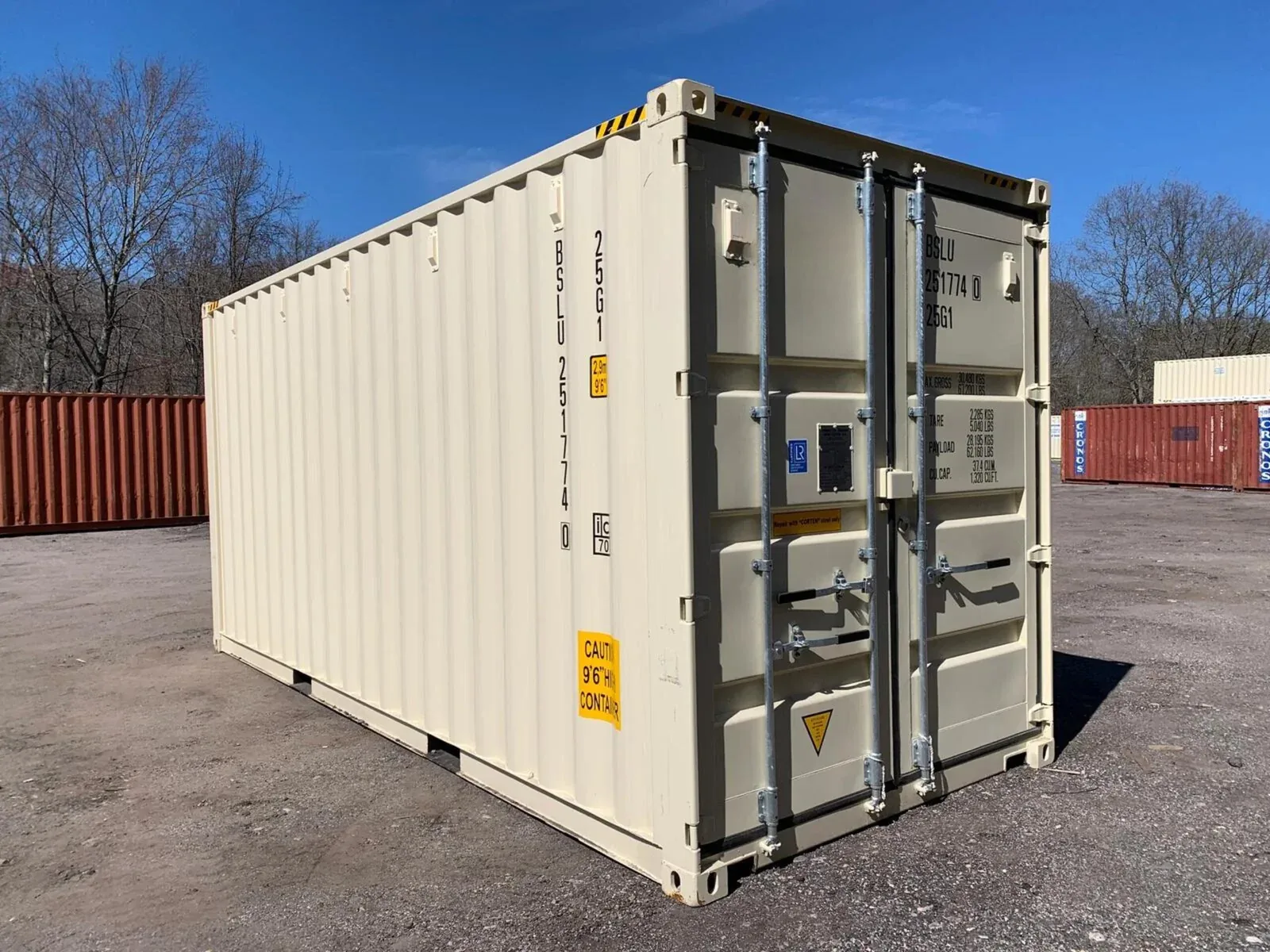
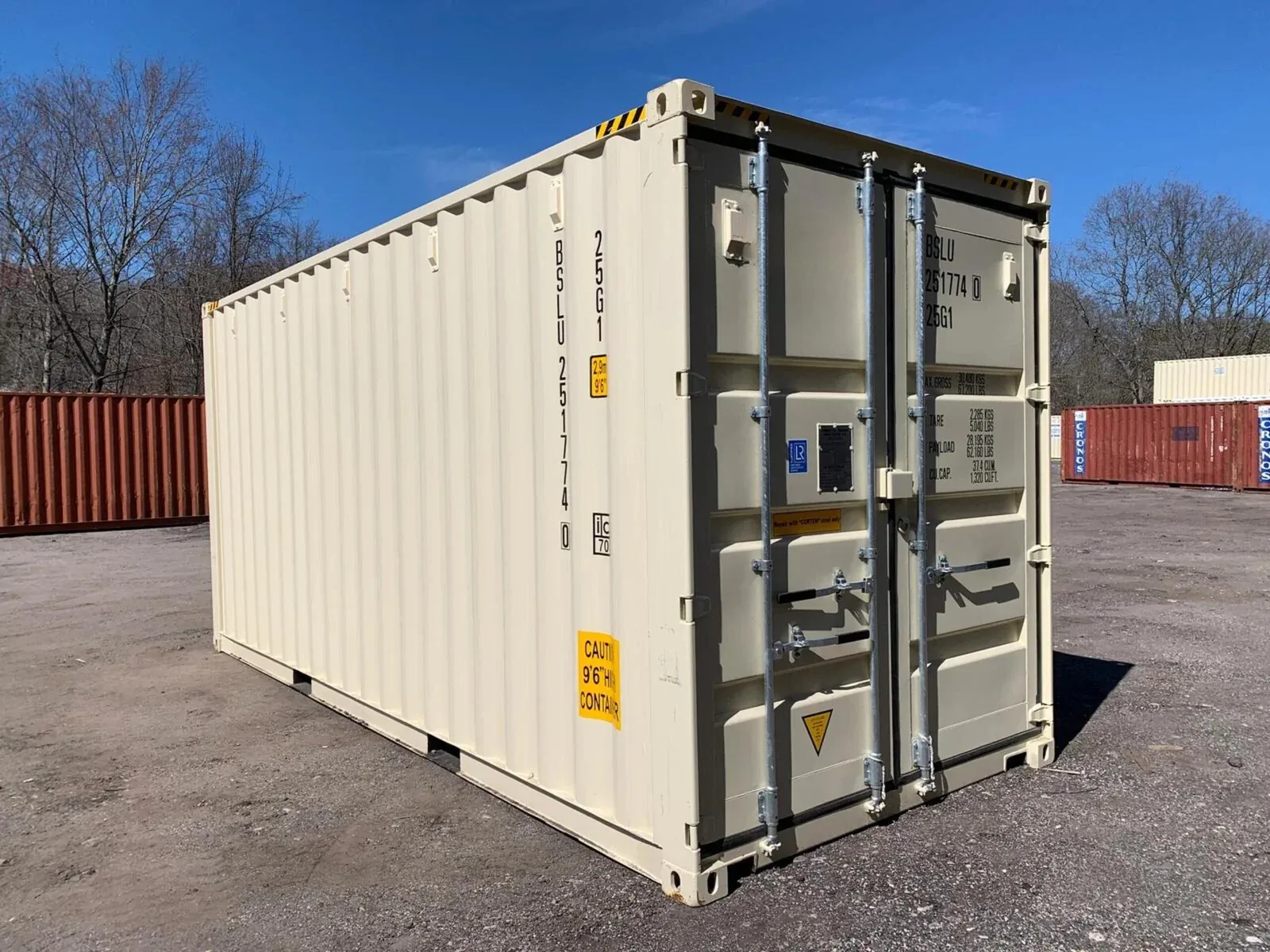
| 20 ft | 6.06 m long, 2.44 m wide, 2.59 m high | The default. A tradie's full kit, a car with room to walk around it, a household's furniture |
| 30 ft | 9.12 m long, 2.44 m wide | Fertiliser, seed and machinery on a working farm, or stock for a business that keeps growing |
| 40 ft | 12.19 m long, 2.44 m wide, 2.59 m high | Whole-of-farm storage or two households' worth. Needs the longest clear run to unload |
Browse 10 ft, 20 ft, 30 ft and 40 ft containers, or start from all shipping containers.
A used wind-and-watertight unit does most jobs here
For storage on a block, a used container in wind-and-watertight grade is where the money goes furthest. The grade means what it says: rain and wind stay out, the doors seal, the floor is sound, and the unit may carry surface rust, dents and faded paint. It is not a freight grade — if the container is going onto a truck for export, you want cargo-worthy, and if it is going to stand in front of a house you care about, one-trip or new looks the part.
Every unit is listed with its grade and real photos, so you see the one you are buying before it leaves the yard. Used shipping containers has the current stock, and new, one-trip or used explains the grades in plain terms.
Ordering, payment and delivery
Nothing is charged on the website. Put the unit in the cart or send a quote request through contact and you get an emailed invoice; pay by bank transfer, PayID or an emailed card link. Delivery is booked once payment clears, and it is free to any Albury or Wodonga address, in town or out on a block, NSW side or Victorian side — the freight is already in the listed price, so nothing is added to the invoice.
If you would rather handle it yourself, collection from the Melbourne yard is free as well. The delivery page explains how the windows work, and tell us about access when you order: a long gravel driveway, a low branch, a gate narrower than it looks. All of it is easier to plan for than to solve on the day.