What the bund actually is
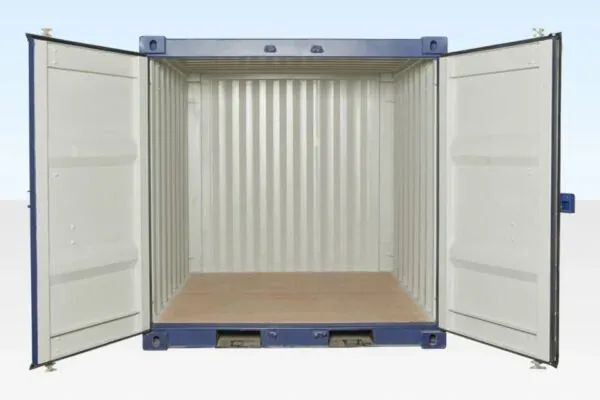
In a standard container the floor is marine ply or steel sheet laid in sections. The seams and the join to the walls are not liquid-tight, so a leaking drum ends up in the soil underneath the box. A bunded store replaces that floor with 3mm Durbar chequer plate welded directly into the container base, forming one continuous tray. The sump sits below the door sill line, so pooled liquid stays in the unit rather than running out the doors.
Three floor layouts, and which job each suits
- Flat floor — the bunded floor is the working floor. Simplest way into containment, and it loads easily with a pallet or a hand trolley.
- Raised bund — a 300mm bund wall runs around the sump floor. On the 10 ft raised unit the listing states roughly 2,000 litres of containment across the full internal floor (2.84 m x 2.35 m x 0.3 m), so it holds a drum or IBC failure without filling up.
- Open mesh floor — a hot-dip galvanised mesh floor sits above a 300mm sump, rated 7.5 kN/m² on the 10 ft listing. Spills drop straight through and the stored drums stay above the liquid instead of sitting in it.
That last difference matters more than it sounds. If drums sit directly on a flat or raised floor for months, every minor weep pools under the base and starts eating it. Mesh keeps the containers dry, and cleaning the unit means draining the sump rather than mopping around twenty drums.
Sizes and what the site actually lists
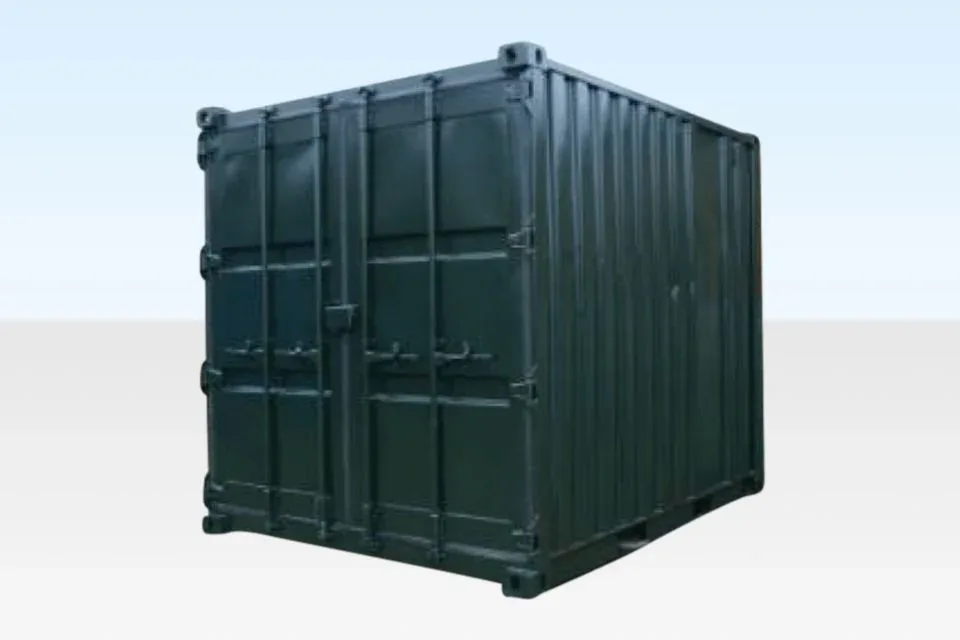
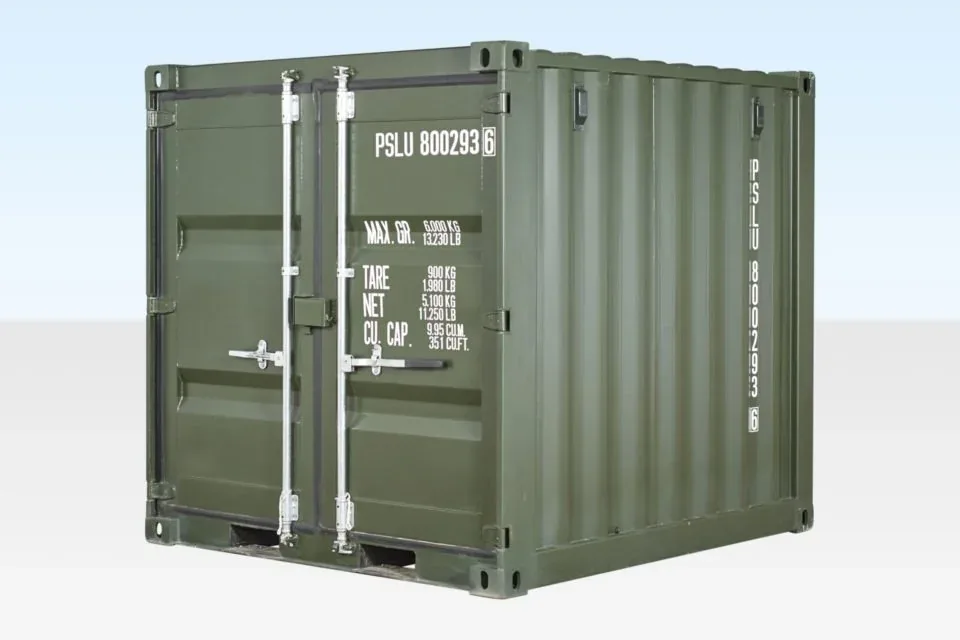
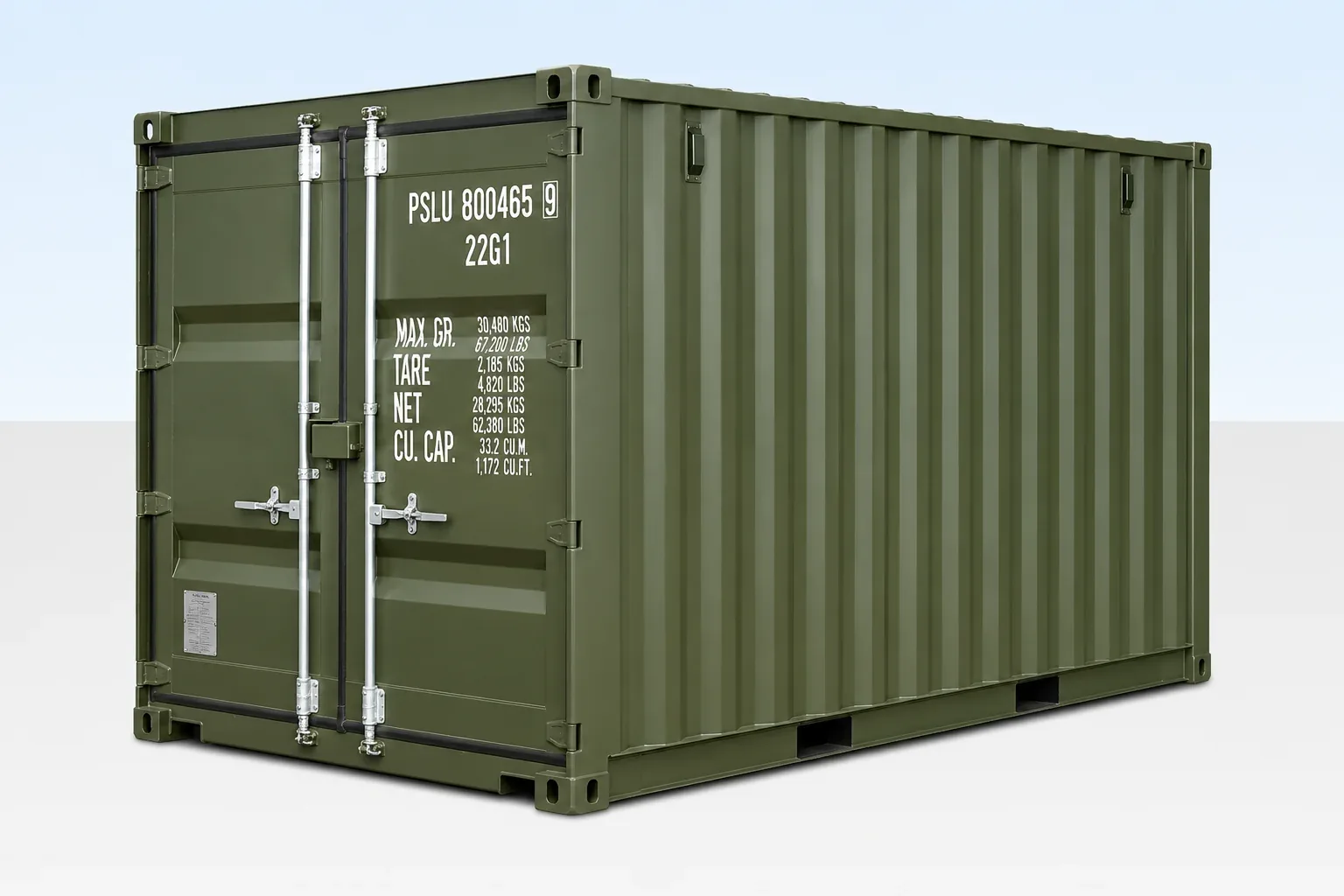
The bunded stores listed are 8 ft and 10 ft units built from new one-trip Cor-Ten steel containers. The 8 ft measures 2.44 m long, 2.20 m wide and 2.26 m high externally, at 984 kg for the raised bund and 1,055 kg for the flat floor. The 10 ft measures about 3.05 m x 2.44 m x 2.59 m. The 8 ft units carry 8 vents and the 10 ft units 12, against the two vents a dry-storage container has — that airflow is what keeps vapour from flammable and corrosive materials from building up inside a sealed steel box.
Every one has exterior hinged double doors at the end, two locking bars per door and a factory-fitted lockbox, plus forklift pockets so it can be repositioned on site without a crane. Need more than 10 ft of containment, or a store with a partition for acids and solvents kept apart? Modified containers are built to order.
How much spill it has to hold
The working rule the listings go by is 110% of the largest single container you intend to store — one 1,000 litre IBC means containment for 1,100 litres. Two 200 litre drums don't double it; the rule is driven by the biggest one. Your state WHS regulator, your council and your insurer may each have a view, and the requirement changes with what is in the drum, so confirm the volume before you order rather than after. Ring us with the drum and IBC counts and we will tell you which of the three floors covers it.
Who buys one
- Farms and grazing properties storing diesel, hydraulic oil and ag chemicals away from the house and the shed floor.
- Earthmoving, civil and construction sites holding refuelling drums and oils where a spill would otherwise run into stormwater.
- Mechanical workshops, panel shops and transport yards with drums of oil, coolant and solvent.
- Spray contractors, nurseries and councils holding herbicide and pesticide concentrates.
- Mine and exploration sites where the containment requirement comes from the site's own environmental conditions.
What they have in common is a spill that would cost more to clean up than the store costs to buy.
Delivery and getting it into place
A bunded store travels like any container: tilt-tray or side-loader, depending on the unit. A tilt-tray wants roughly twice the unit's length in straight, clear space plus room to swing, and a side-loader wants a clear strip alongside the drop point. Ground should be firm and level — a bunded store full of drums is heavy and you do not want it settling out of level.
Delivery is free to any address in Australia, metro or remote, with the freight already in the listed price. Units are dispatched 2–5 business days after payment clears, then 2–7 business days to Melbourne, Sydney, Brisbane, Adelaide and Canberra metro, 4–10 to regional VIC, NSW, QLD and SA, 7–15 to Perth, Darwin and Hobart, and 10–21 to remote or unsealed-access sites. Collection from the Melbourne yard is free if you would rather fetch it. See which truck suits your site and the full delivery policy.
What a bunded store is not
It is not a licence to store anything you like. Containment is one part of storing dangerous goods; signage, segregation of incompatible materials, fire protection and, for some quantities, a notification or licence from your state regulator also apply. Signage and placarding requirements are set by your regulator, not by us, so check before the drums arrive. Nor is it a dry store — the sump is there to catch spills, and tools and stock stored on a bunded floor end up sitting in whatever the last drum left behind.
Buying one
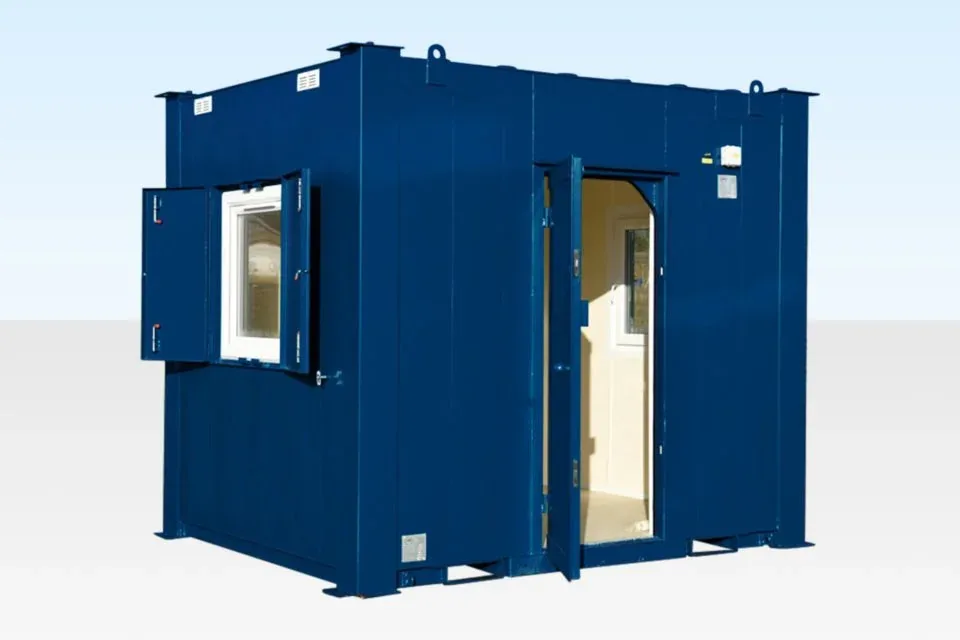
The four units we list are the 8ft X 8ft Flat Floor Bunded Store, the 8ft X 8ft Raised Bunded Store, the 10ft Flat Floor Bunded Store and the 10ft Open Mesh Floor Bunded Store, plus a 10ft raised bund unit in blue. They sit inside the ordinary size categories alongside plain containers, so look for the word bunded in the listing name: the 8 ft pair are in 8 ft x 10 ft containers and the 10 ft units in 10 ft shipping containers. Every listing carries its own photos and a GST-inclusive price.
Fitting out afterwards — shelving, racking, vents, locks — comes out of container accessories. If you are not sure whether you need containment at all, the container buying guide covers grades and site prep, and we are on the phone either way.