Three numbers decide it
Before you look at deck lengths, get these three figures together:
- The car's kerb weight — the empty weight of the vehicle you're towing, from the rego papers or the compliance plate. Add for fuel and anything left in it.
- The trailer's tare — what the trailer weighs empty. It is on the trailer's compliance plate, and we can give you the figure for any unit you're looking at.
- The trailer's GVM — gross vehicle mass, the most it may weigh loaded, trailer included. Every Steel Box trailer listing states its GVM on the page.
Payload is GVM minus tare, and that is what the car has to fit inside. A trailer rated at 2,000 kg does not put 2,000 kg of car on the deck — the steel frame, axles, ramps and deck are already eating into the number.
What the GVM options actually mean
Our car carriers come in a small set of ratings: 1990 kg, 2800 kg, 3200 kg, 3500 kg and 4500 kg GVM. The jump from 1990 kg to 2800 kg is the one that matters most, and it is not about how much car you can carry — it is about what the trailer needs to be legal.
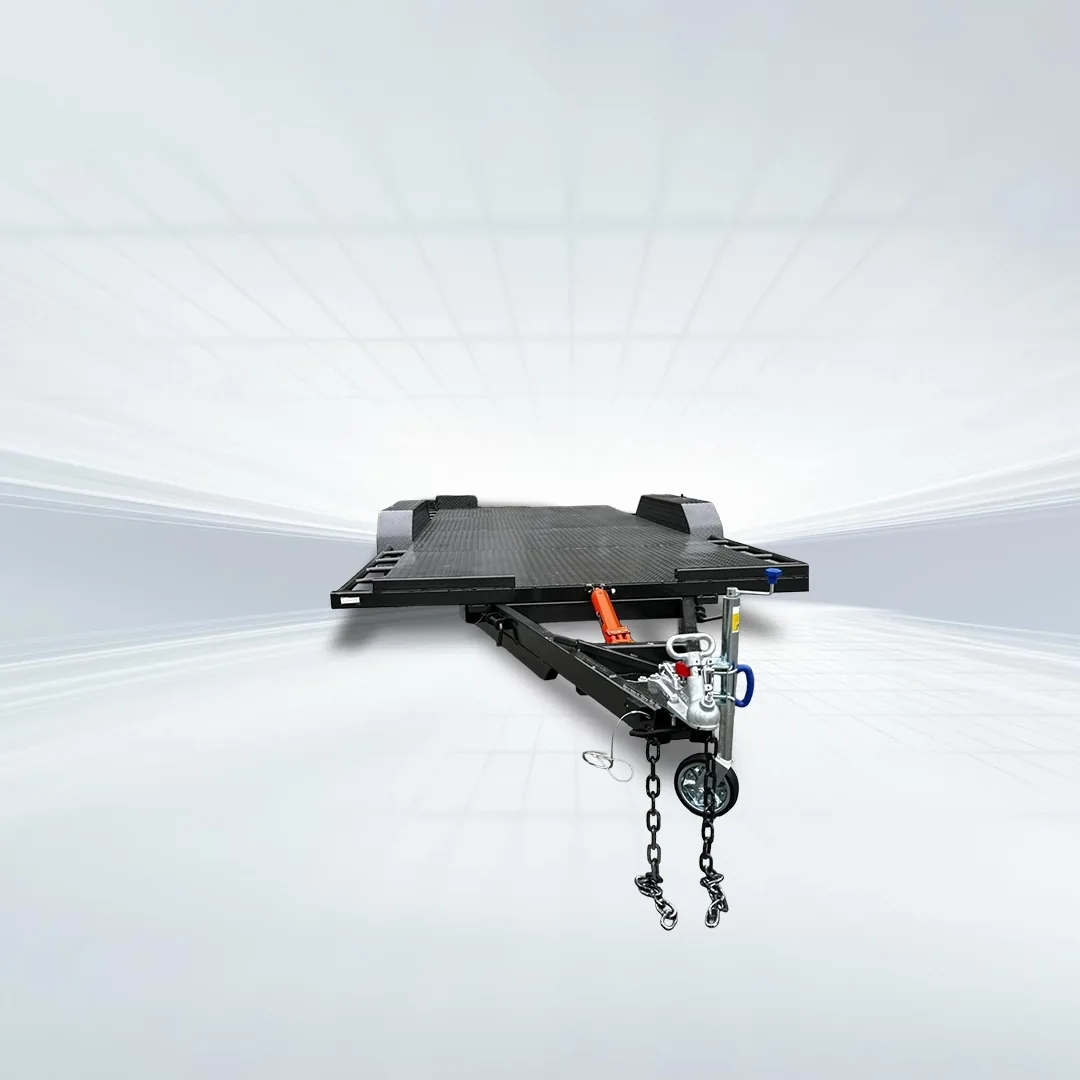
Under the Australian design rules, brakes are not required up to 750 kg GTM; from 750 kg to 2,000 kg the trailer needs brakes on at least one axle, which can be over-run brakes; and over 2,000 kg GTM the brakes must work on every wheel plus a breakaway system that applies them if the trailer comes off the coupling. A trailer built to 1990 kg sits deliberately under that 2,000 kg line: over-run brakes, no breakaway unit, no brake controller wired into the tow vehicle, and a much wider choice of vehicles that can legally pull it. Step to 2800 kg and above and you take on all of it.
So the honest question is not "what's the biggest trailer I can buy" — it is "what does the car weigh, and does my vehicle want electric brakes and a controller fitted". GVM, tare and trailer brakes explained goes through those thresholds in detail.
Then check what the vehicle can legally tow
Your tow vehicle has its own numbers and they can be lower than the trailer's rating:
- Braked towing capacity — the maximum the vehicle is rated to pull with a braked trailer.
- Towball download — how much weight may sit on the ball, usually around ten per cent of the loaded trailer.
- Gross combination mass (GCM) — the ceiling for vehicle and trailer together, loaded, including passengers and gear in the car.
The lowest of those is your real limit, and it is printed in the owner's handbook and on the vehicle's compliance plate. Most dual-cab utes and large SUVs are rated to tow somewhere between 2,500 kg and 3,500 kg braked; smaller SUVs, wagons and sedans are rated considerably lower, and a few are not rated to tow at all. Read your own handbook rather than going by what the model is supposed to do.
Deck length: how much trailer the car actually needs
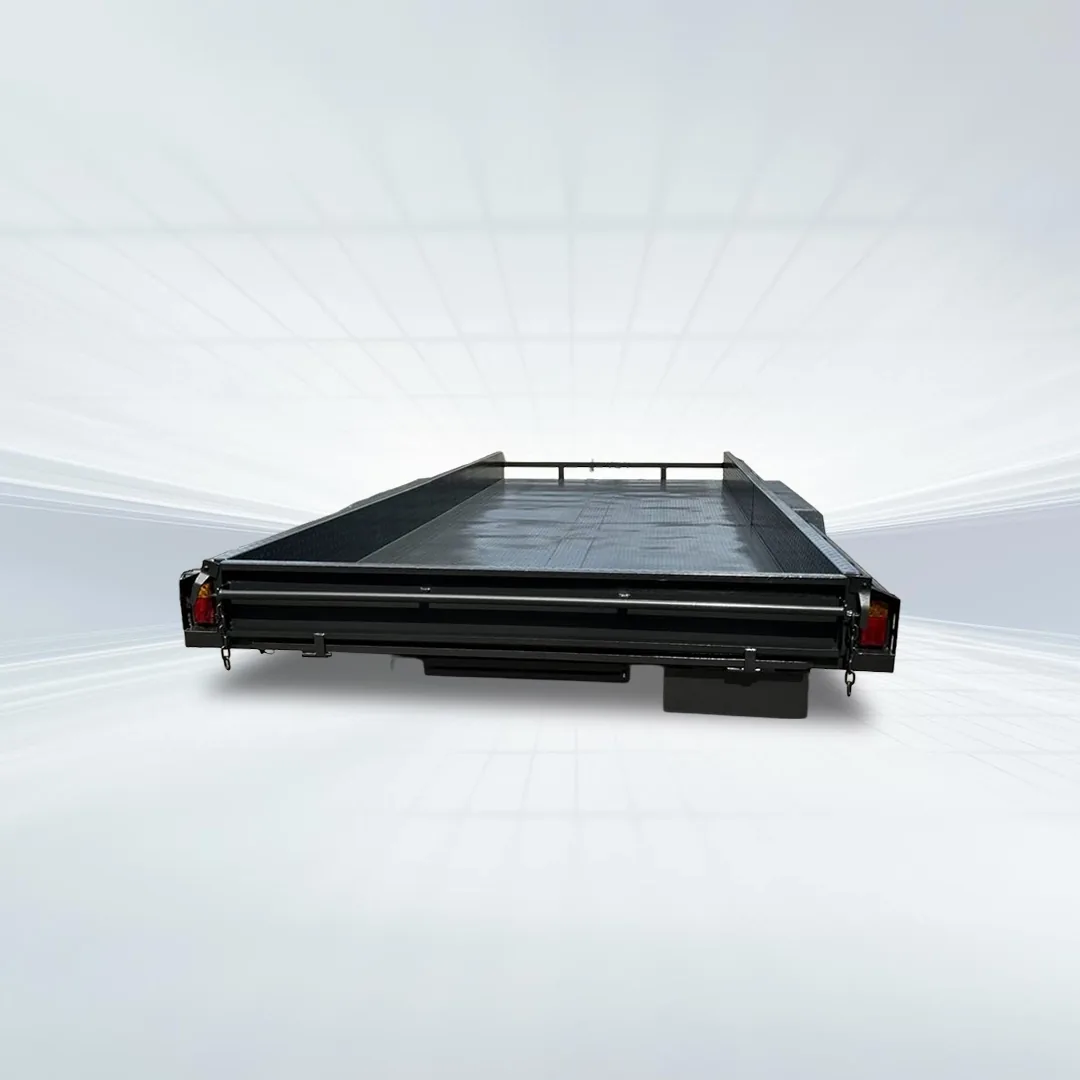
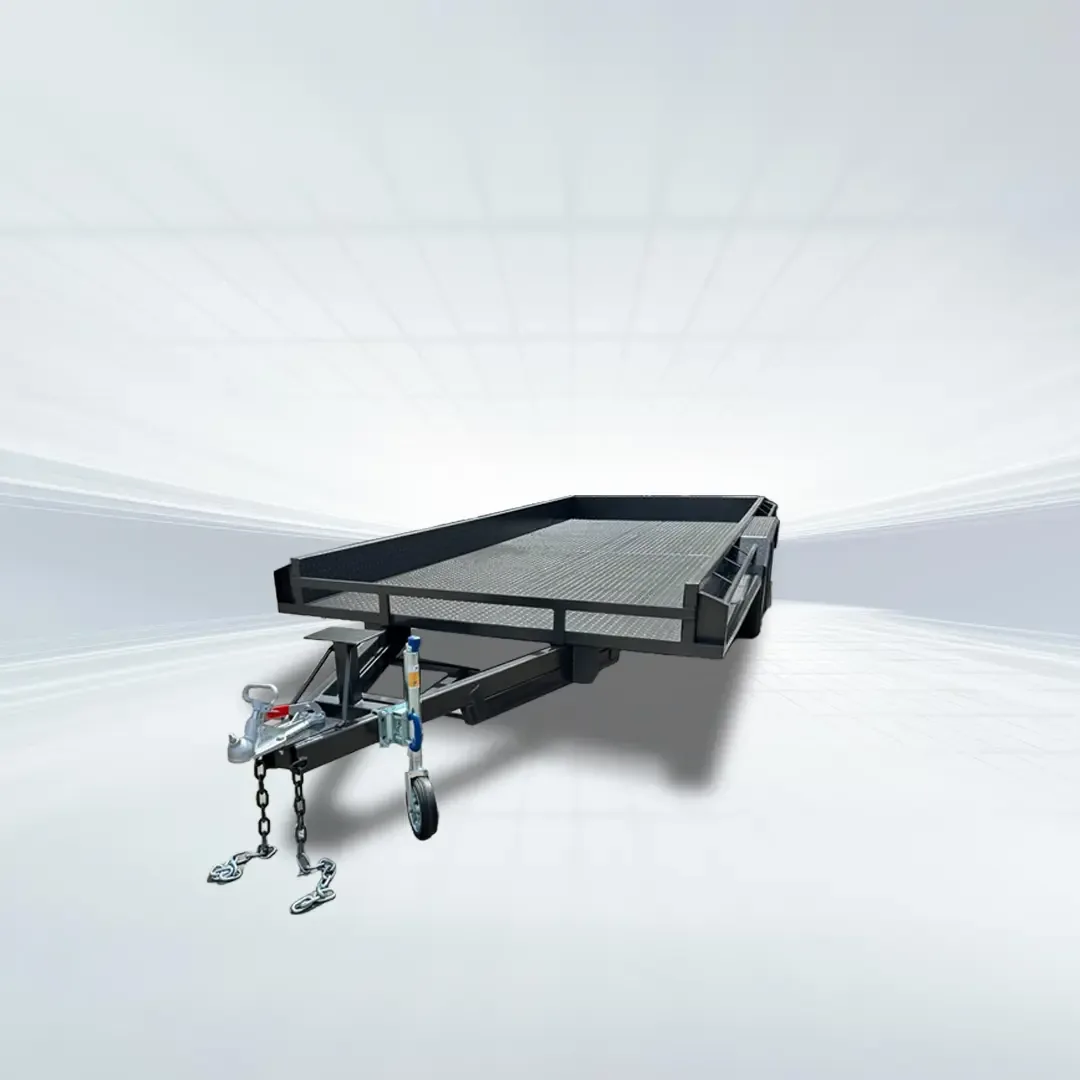
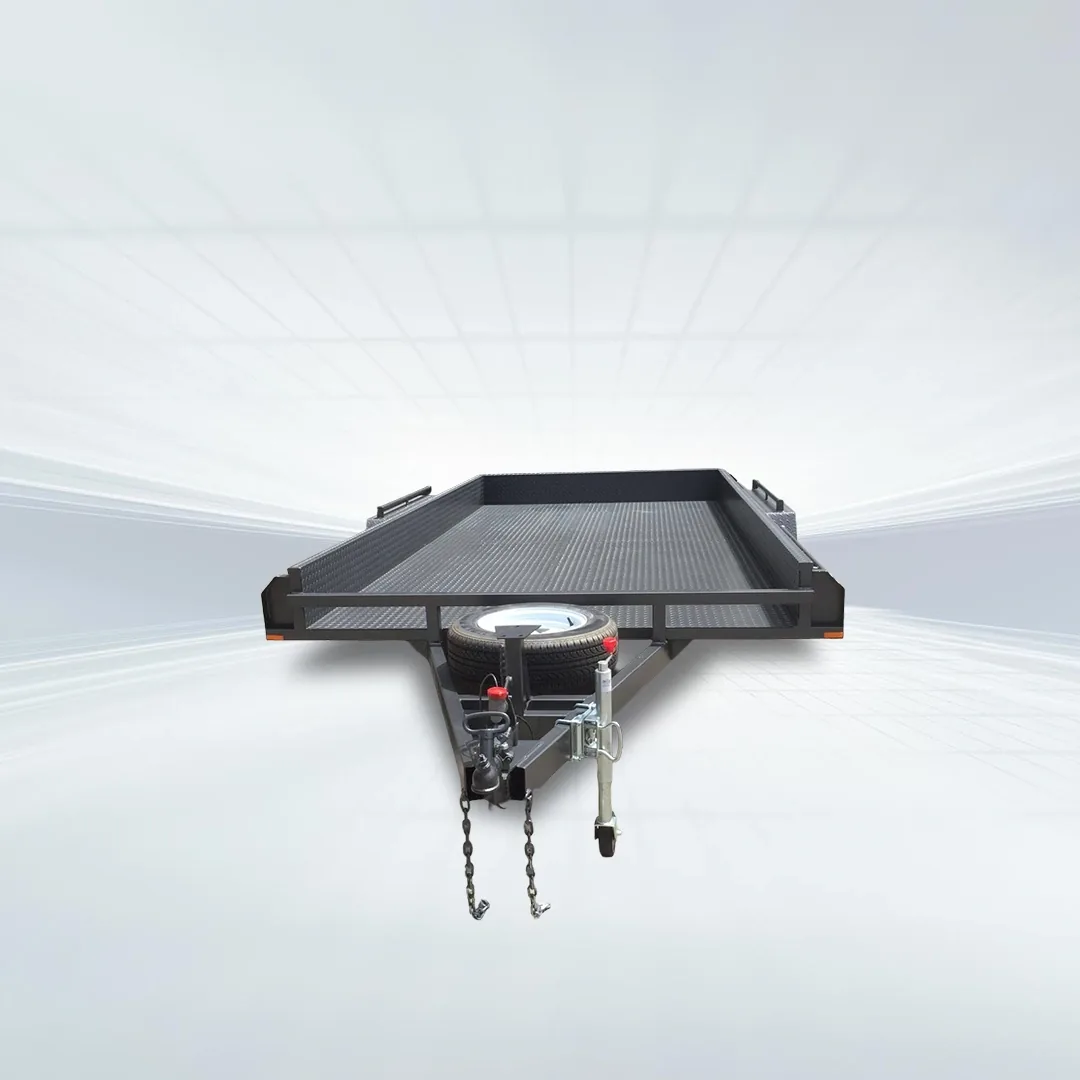
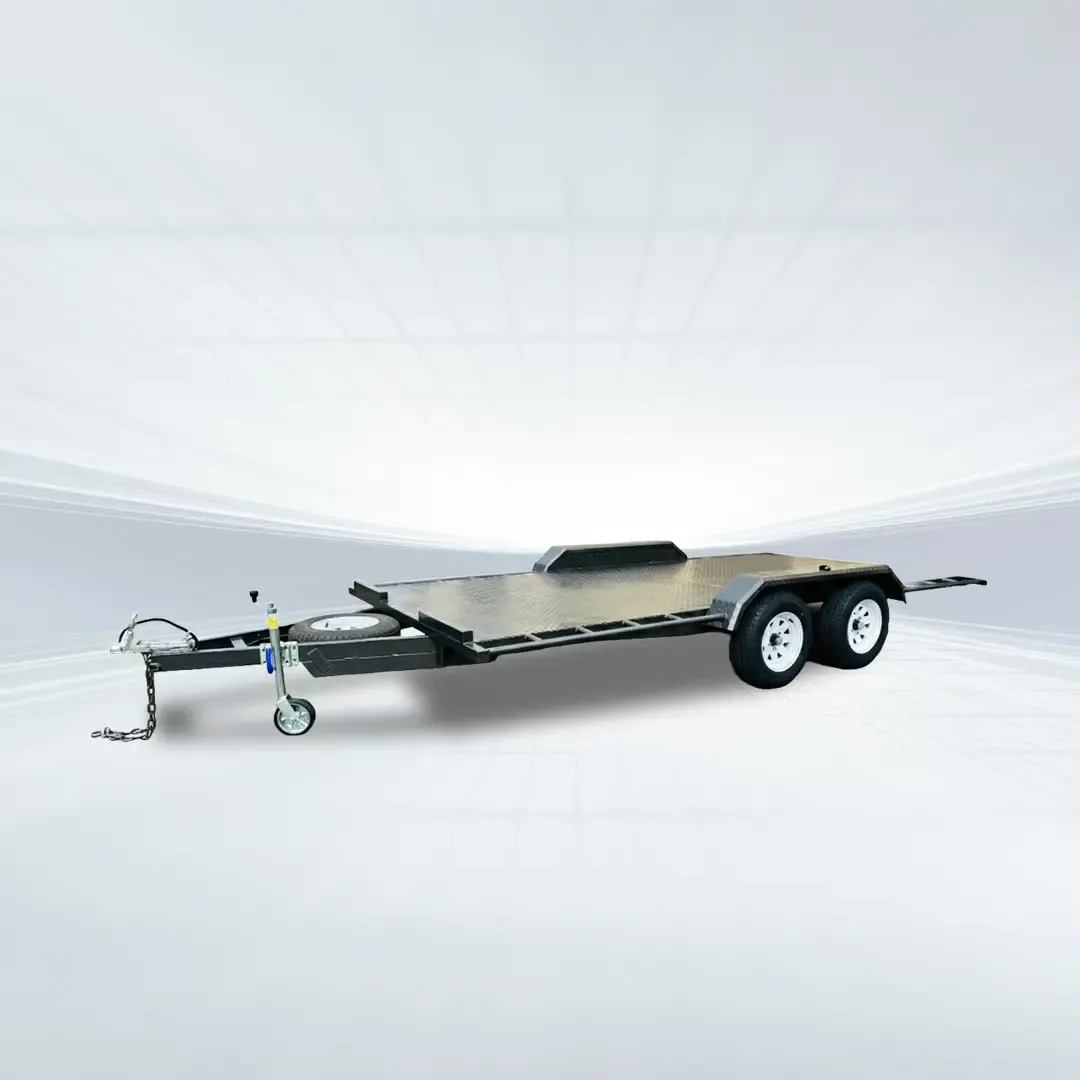
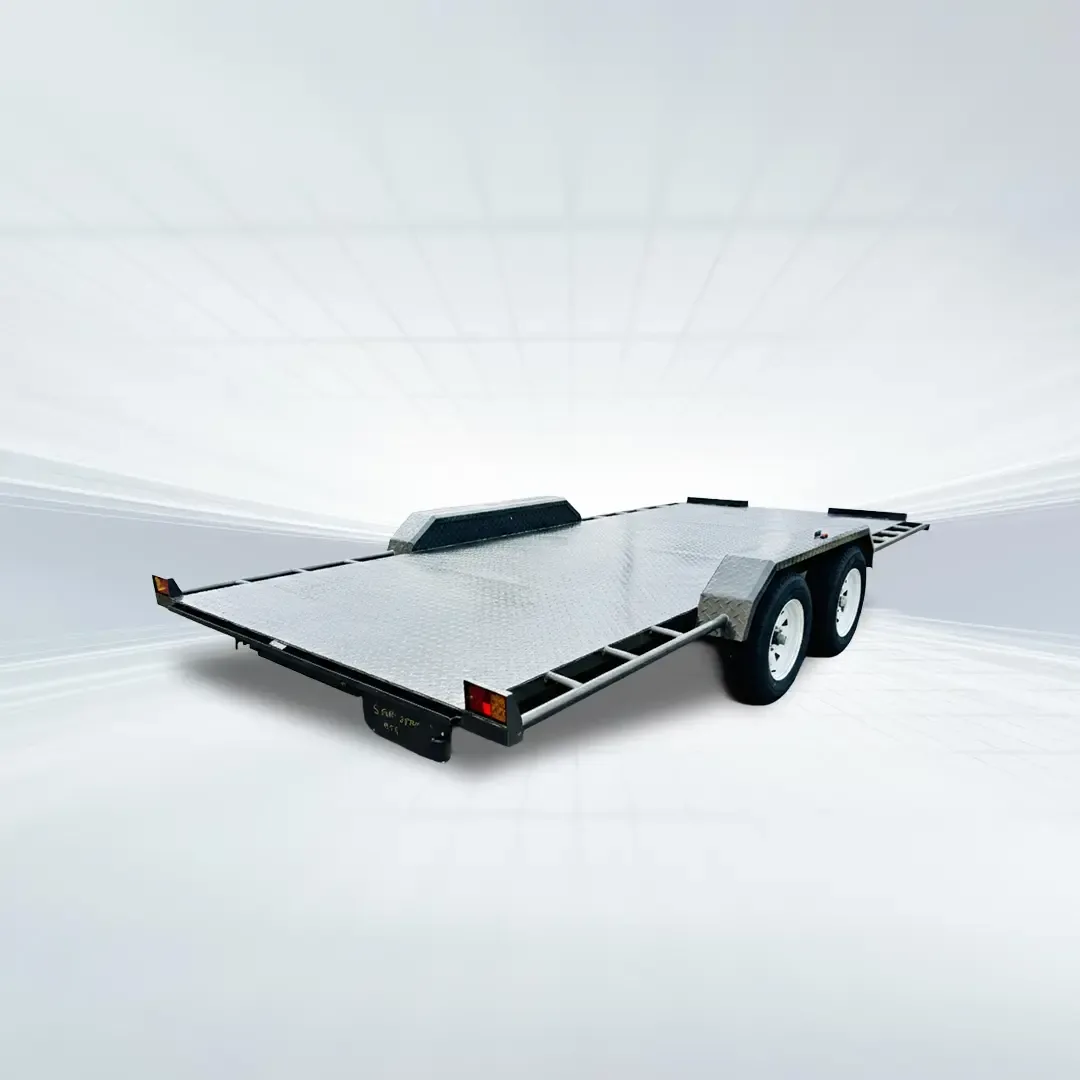
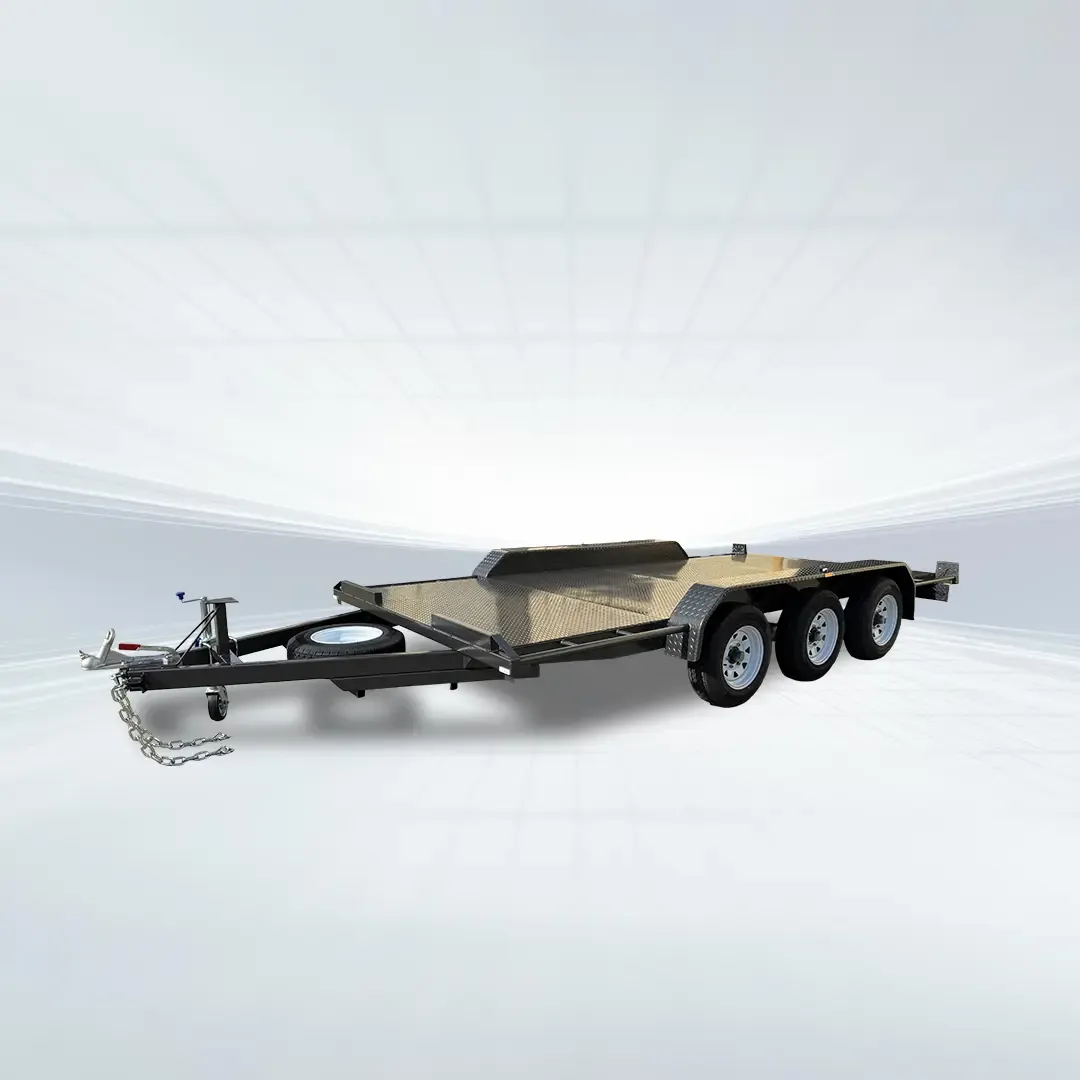
Our car carriers come in 14 ft (4.27 m), 16 ft (4.88 m) and 18 ft (5.49 m) decks, all 6 ft 6 in (1.98 m) wide.
- 14 ft — small hatches, sedans and compact cars, where you want the shortest, lightest trailer that still takes all four wheels.
- 16 ft — the standard size, and what most buyers end up with. It takes the usual run of sedans, wagons, utes and SUVs with room to position the car for balance.
- 18 ft — long-wheelbase utes, 4WD wagons and anything where you want more deck to shift the car forward or back over the axles.
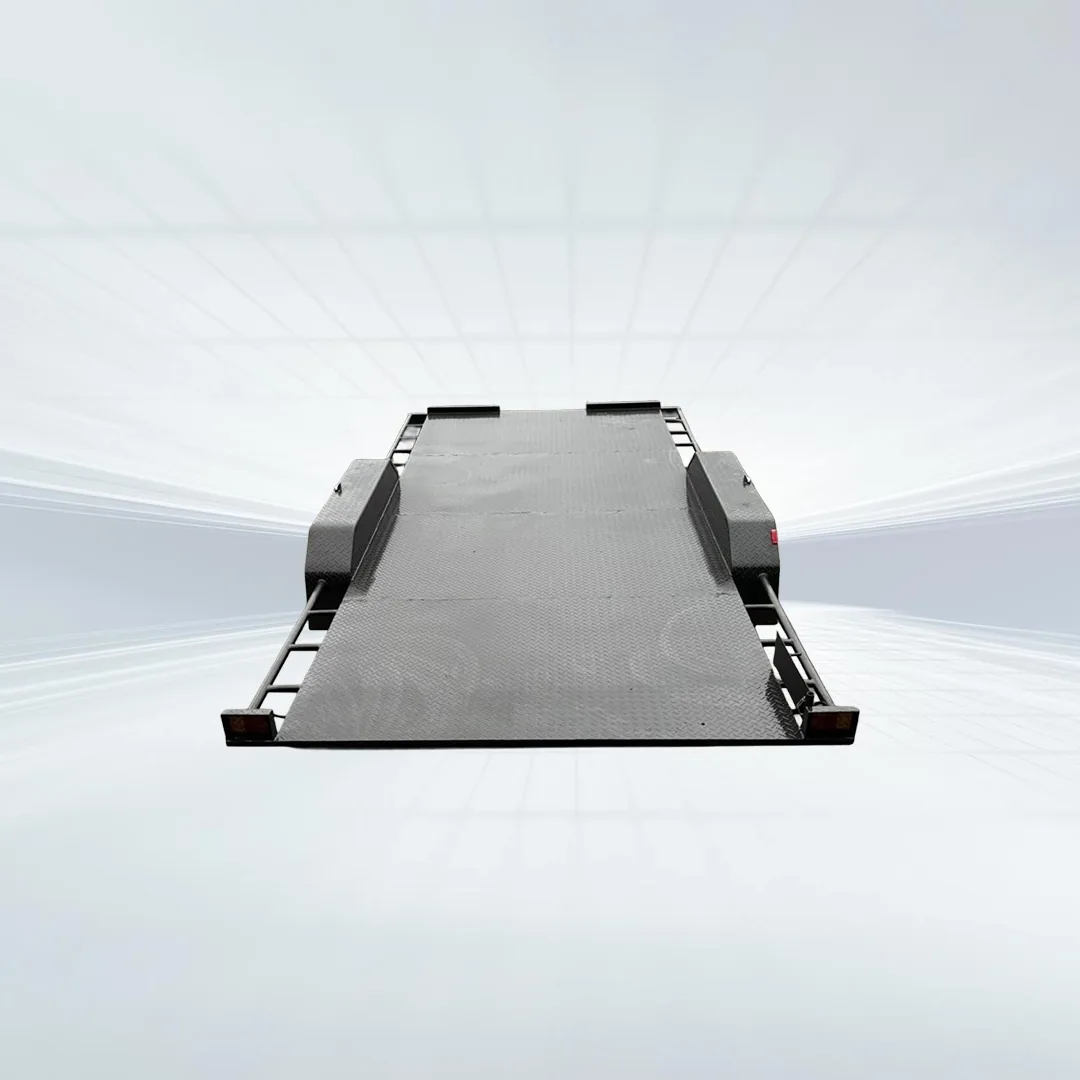
The deck does not have to be longer than the car. On a car carrier the nose and tail overhang the deck, which is normal — what matters is that all four wheels sit on the deck and the tie-down points line up with the car's chassis. A 16 ft deck carries a car longer than 16 ft quite happily once it is positioned and strapped.
Width is the number people forget. At 1.98 m the deck takes ordinary passenger cars and utes comfortably, but check the track width on a wide 4WD, anything with flares, or a car running spacers before you commit.
Beavertail or semi-flat
Both are Australian-built and both load with slide-in ramps.
- Beavertail — the rear of the deck drops away, so the ramps sit at a shallower angle. That is the one for low cars: sports cars, lowered sedans, anything with a low front lip or a long nose that will scrape on a flat ramp.
- Semi-flat — a flatter deck that keeps the load lower and the ramp angle steeper. Better for utes, 4WDs and regular towing where ground clearance is not a problem, and it gives you a usable flat deck when the car is off.
There is also a manual hydraulic tilt model in 16 ft if you would rather tip the deck than lay ramps. See the full range of car carrier trailers, the beavertail car trailers and the semi-flat car trailers.
What to send us
Tell us the car's make, model and year, its kerb weight, what you'll be towing with and that vehicle's braked towing capacity. With those four we can tell you which GVM and deck length is right — and tell you honestly if the answer is that your vehicle is the limit, not the trailer. Send it through as a quote request and you'll get an emailed invoice, not a website charge. Every trailer is delivered free to any address in Australia, and collection from the Melbourne yard is free too.