Use the operating weight, not the class badge
Mini excavators are sold by class — 1 t, 1.7 t, 2.7 t, 3.5 t — and the class number is close to the machine's operating weight, not the weight you can safely put on a deck. A 1.7 t machine such as the Kubota U17 series runs about 1,680–1,730 kg with a bucket on and fluids full. That is the number to work from, and it is on the machine's spec plate or in the handbook.
Two mistakes cost people a trip back to the yard: using the dry weight of a bare machine with no bucket, and forgetting the ramps, the spare bucket and the ripper that ride on the deck with it. Weigh the machine on a public weighbridge if you are not sure — it is the cheapest half hour in the job.
The sum: GVM minus tare equals payload
- GVM — the maximum the trailer and everything on it may weigh. Every Steel Box trailer listing states it.
- Tare — what the empty trailer weighs, on the compliance plate and the listing.
- Payload — GVM minus tare. That is the budget for the machine, ramps, bucket and anything else on the deck.
Worked example, using a plate that reads 2,800 kg GVM and 700 kg tare: payload is 2,100 kg. A 1,730 kg machine plus ramps and a bucket is close to that ceiling, so the margin is thin before you add a second bucket. If the machine is heavier than the plate allows, go up a trailer rather than overloading the one you have.
Deck length matters as much as GVM
A 1.7 t mini excavator is roughly 3.5 m long with the arm folded down and 1 m to 1.24 m wide, depending on whether the tracks are retracted. An 8 × 5 ft deck (2.44 × 1.52 m) carries the weight comfortably but the machine hangs over each end. That is normal for machinery trailers with the right tie-downs, but it puts weight behind the axle and it has to stay inside your state's overhang rules — check those before you load.
A 10 ft deck (3.05 m) takes most of the machine and gives a longer footprint for the straps. The extra deck length is the difference between a trailer that tows well at 100 km/h and one that feels light on the drawbar.
Width is the easy part: a 1.7 t machine at about 1.24 m wide sits inside a 5 ft (1.52 m) deck with room for the bucket alongside, and a 6 ft (1.83 m) deck gives more room again for tracks and attachments.
What the range covers
| Trailer | Deck | GVM | Suits |
|---|---|---|---|
| 7 × 4 scissor lift, grip mesh ramp | 2.13 × 1.22 m | 1,990 kg | Small machines and scissor lifts; check payload before committing |
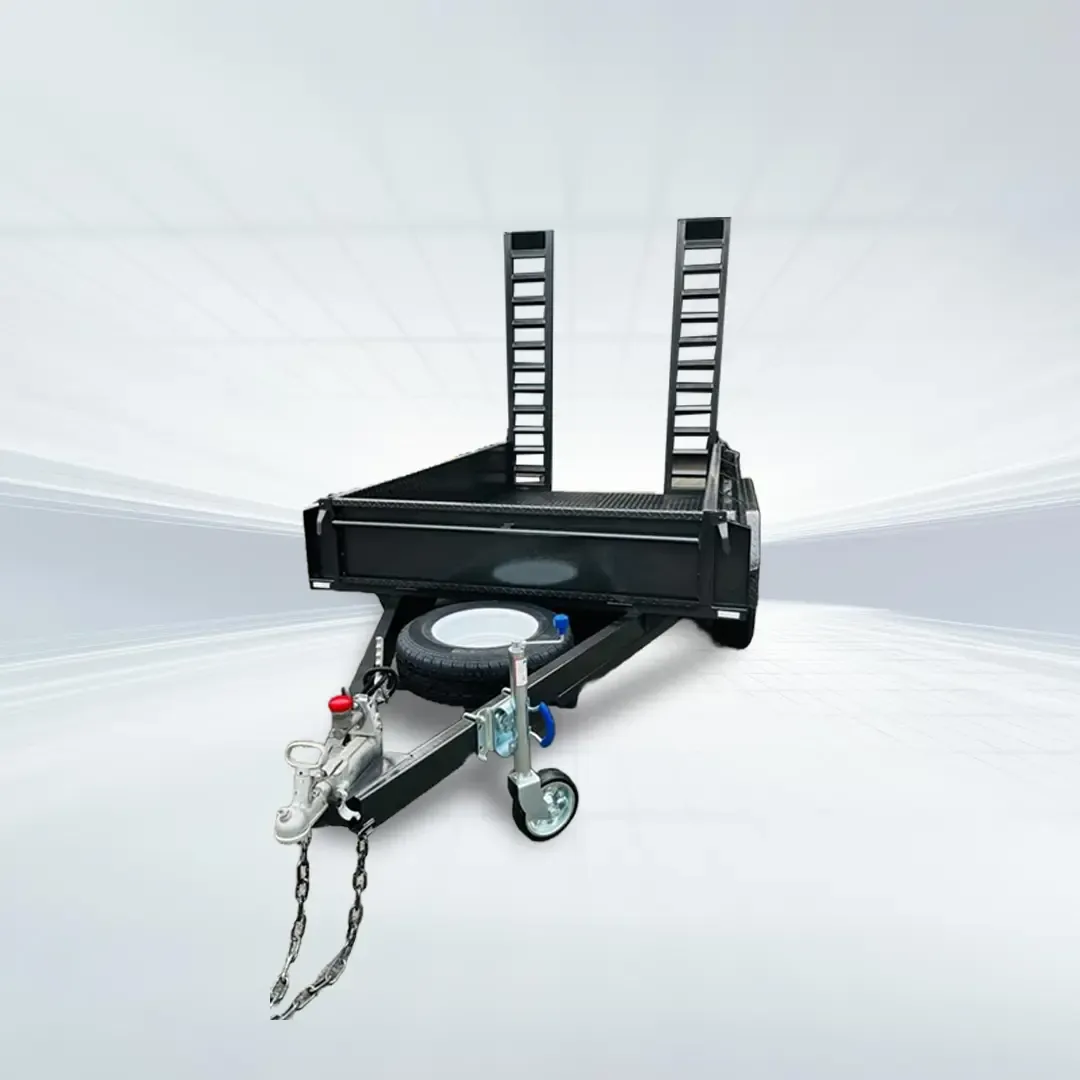
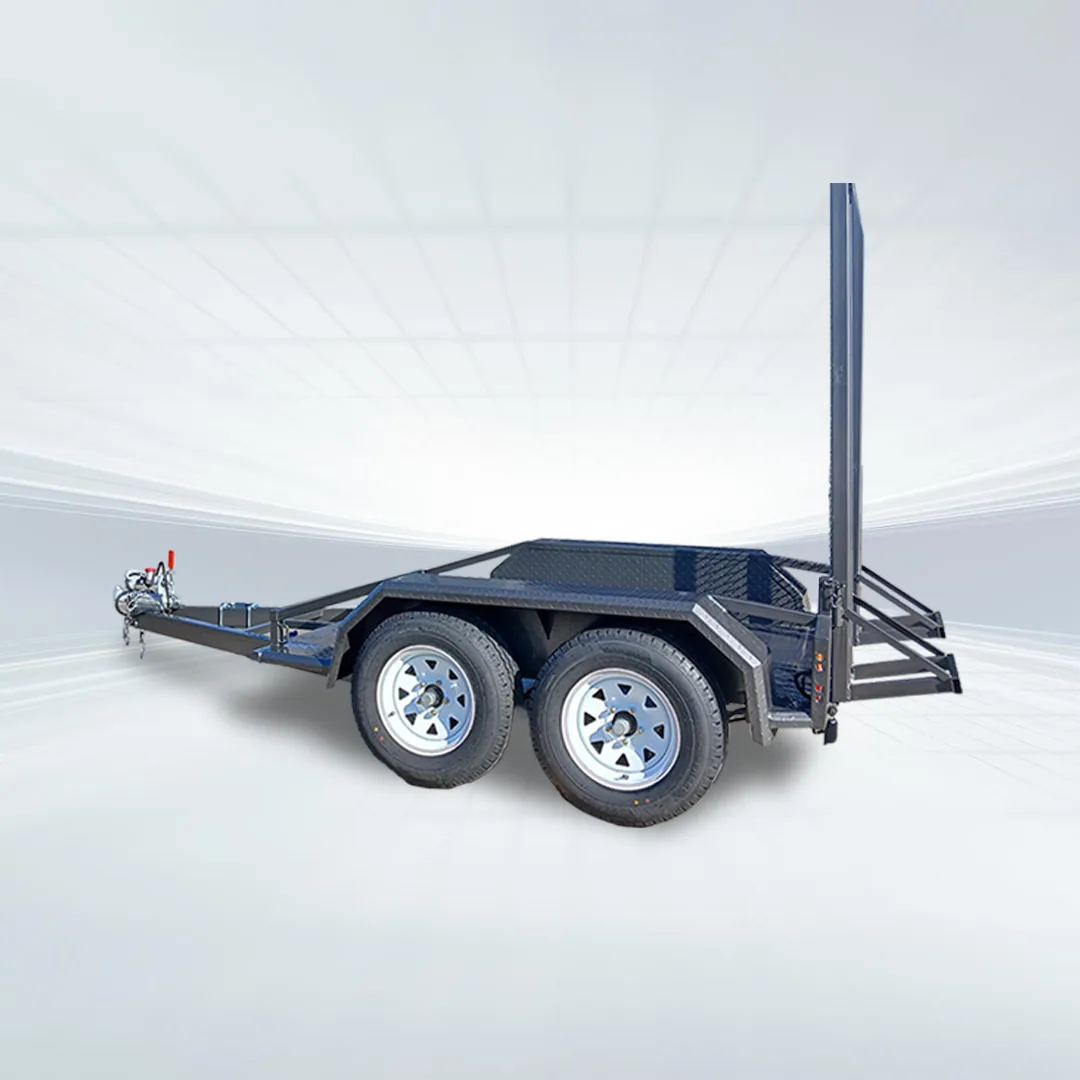
| 8 × 5 machinery, slide-in or grip mesh ramps | 2.44 × 1.52 m | 2,800 kg | 1 t to 1.7 t machines, short trips; machine overhangs |
| 10 × 6 machinery, grip mesh ramp | 3.05 × 1.83 m | 2,800 kg | Wider deck for tracked machines with a bucket beside |
| 10 × 5 machinery, grip mesh floor and ramp | 3.05 × 1.52 m | 3,200 kg | Longest deck and highest GVM in the range |
Every listing carries real photos, the GVM and a GST-inclusive AUD price. See the machinery trailers for what is in stock.
Ramps and loading
Grip mesh is the better ramp surface for steel tracks, particularly in the wet — a smooth ramp with a wet track on it is where most loading incidents start. Slide-in ramps are the neater option under an 8 × 5 deck and are fine for rubber tracks and dry ground.
Load on firm, level ground, not on a slope or soft fill. Lower the deck if the site allows it, drive up in low range with the arm tucked in, and set the machine down so its weight sits over the axle group rather than on the tail.
Tie-down
Four points is the minimum: rated straps or ratchet binders over the tracks, or through the machine's own designated tie-down points, plus the bucket or arm secured so the machine cannot slew or creep. Do not rely on the parking brake and the hydraulics alone. Stop and re-check the straps after the first few kilometres, then again at each fuel stop.
Check the tow vehicle before you buy the trailer
The trailer's GVM is only half the combination. Your ute or light truck has a braked towing capacity and a gross combination mass, and the ball weight of a loaded trailer counts against the vehicle's own payload. A 2,800 kg trailer at GVM behind a loaded dual cab is exactly the combination that ends up over GCM without anyone noticing. Read the compliance plate on the tow vehicle, not the brochure.
Which trailers need brakes, how breakaway systems work and what the ratings mean are set out in GVM, tare and trailer brakes explained — read that rather than guessing at the cut-off.
Buying, delivery and registration
These are Australian-built trailers with the GVM stated on every listing. Delivery is free to any address in Australia — the freight is already in the listed price — or you can collect from the Melbourne yard ready to tow. Trailer registration varies by state; we talk buyers through the paperwork on the contact page before dispatch.