The numbers, side by side
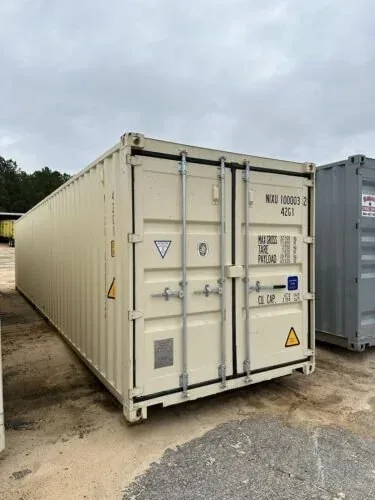
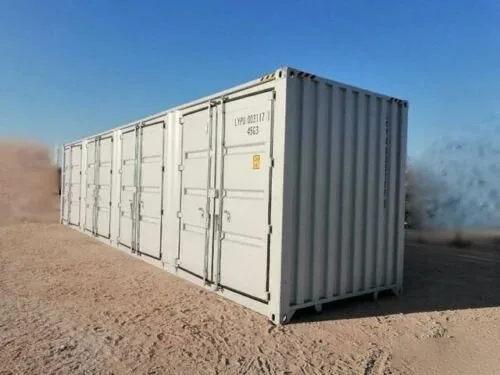
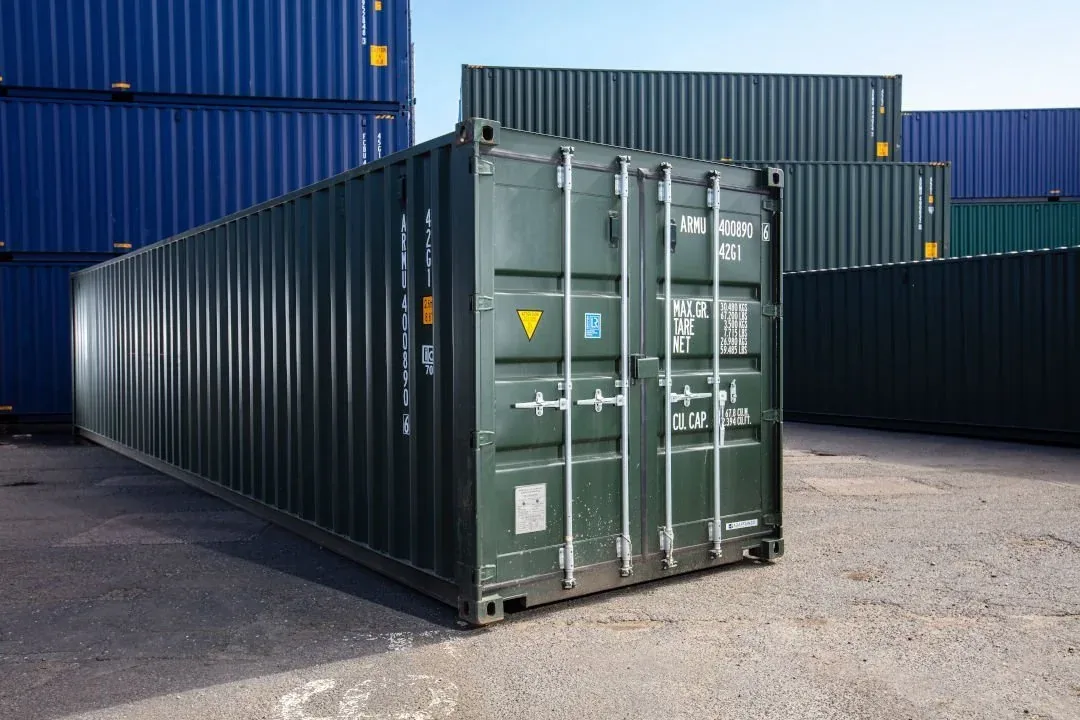
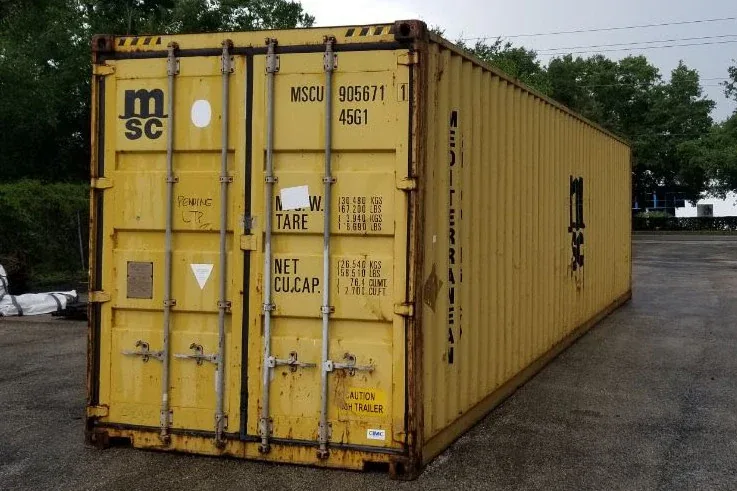
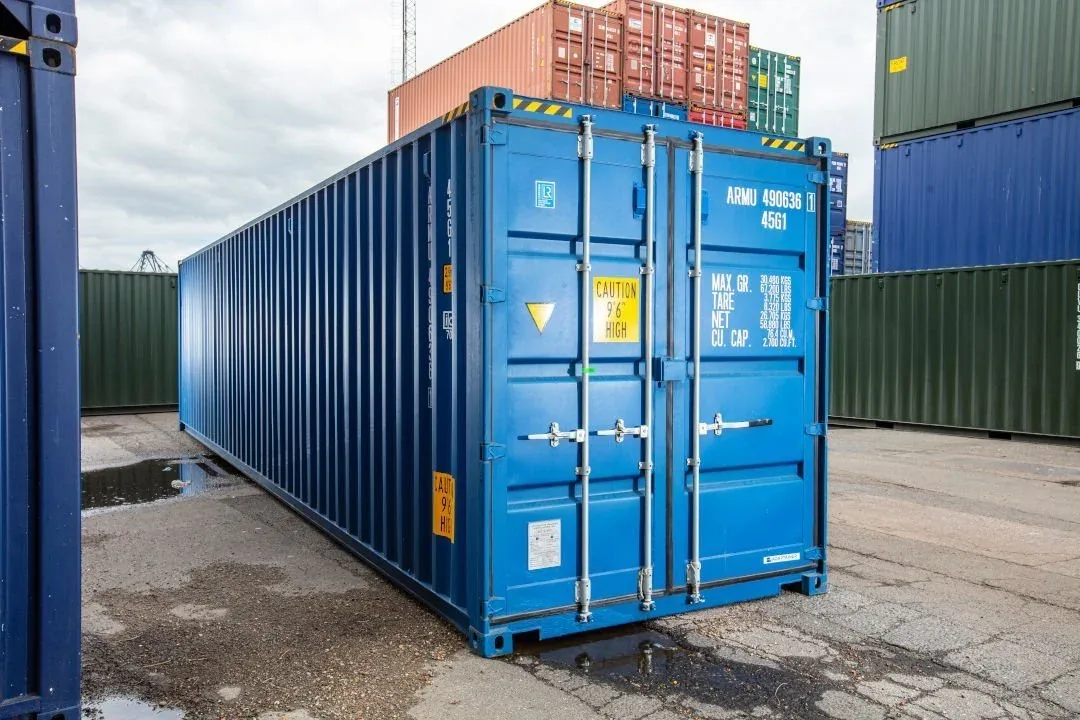
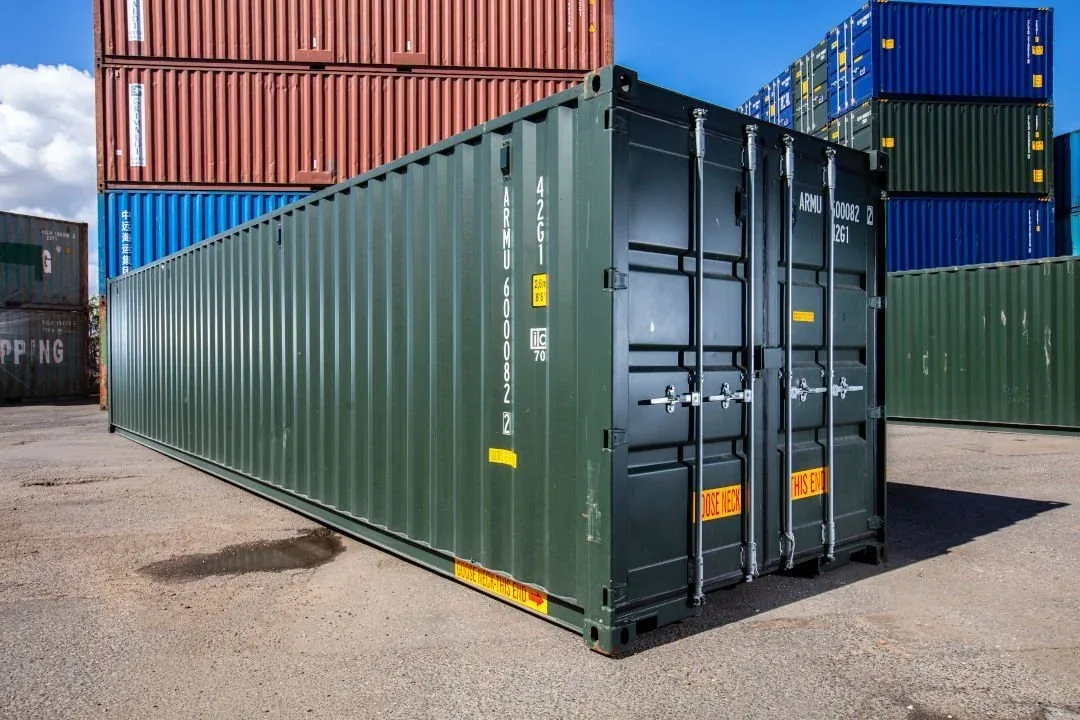
Standard containers are the same box with a different length. Double the length, double the space.
| 20 ft | 40 ft | |
|---|---|---|
| External length | 6.06 m | 12.19 m |
| Width | 2.44 m | 2.44 m |
| Height (standard) | 2.59 m | 2.59 m |
| Height (high cube) | 2.90 m | 2.90 m |
| Usable floor | about 14 m² | about 28 m² |
| Capacity | about 33 m³ (37 m³ high cube) | about 67 m³ (76 m³ high cube) |
| Straight clear run for a tilt-tray | about 12 m | about 24 m |
| Room in front of the doors | 1.2 m to swing them open | 1.2 m to swing them open |
| Maximum gross weight | 30,480 kg | 30,480 kg |
A 40 ft weighs more empty — roughly a tonne and a half more than a 20 ft — so most of the extra space goes to the box itself rather than to extra payload. If the job is dense and heavy, such as sand, gravel or wet timber, a 20 ft takes about as much weight as a 40 ft in half the footprint. If it is bulky and light, such as furniture, insulation or empty crates, the 40 ft is where the value is.
What each one actually holds
Tool store or workshop
A 20 ft takes a 3 m bench down one wall, three or four shelving bays opposite, and still leaves a metre to walk and swing a ladder — the usual pick for a tradesman's gear or a farm workshop. A 40 ft doubles it: two runs of racking, and a clear bay long enough to walk a ride-on mower or a small trailer inside out of the weather.
Farm shed
A 20 ft handles the everyday kit — seed, chemical, fencing gear, hand tools, a few rolls of poly — close to the yards where you use it. A 40 ft suits the slow-moving, awkward stock: pallets of feed, header and seeder parts, spare tyres, a run of timber too long for a ute. Read stopping condensation in an Australian climate before you put seed or machinery in either, because a sealed steel box sweats.
Household goods
A 20 ft is roughly the contents of a one or two-bedroom unit. A three-bedroom house normally fills it and spills over, which is why buyers at that size move up to a 40 ft rather than buy a second box. A four-bedroom house plus a garage is a 40 ft job. If the container is going to sit on a suburban block between moves, the 20 ft is far easier to place and to shift later.
Pallets and stock
A 20 ft takes ten standard pallets in a single tier. A 40 ft takes twenty in the same single tier, or forty if the pallets stack two high and the load can carry it. That is the difference between a week's stock and a season's — and the reason a growing store outgrows a 20 ft before it runs out of floor.
Site access is the real decider
A tilt-tray needs roughly twice the container length in straight, clear run-in, plus room to pull out and turn. For a 20 ft that is about 12 m; for a 40 ft it is about 24 m, and 24 m of clear straight line is a big ask on a suburban block with a driveway, a powerline and a nature strip in the way. A side-loader works from a clear strip beside the drop point instead of in front of it, which is often what saves a 40 ft on a tight site. Either way the ground has to be firm and level — what to put a container on covers pads, sleepers and bearers, and tilt-tray or side-loader explains which truck suits which yard.
Two things catch people out at the 40 ft end. First, the truck is longer and wider than the trailer most buyers are used to, so check gate width, overhanging branches and low wires along the whole run-in, not just at the drop point. Second, leave about 1.2 m in front of the doors so they swing fully open — a 40 ft with its doors against a fence is a 40 ft you can only use from one end.
Two 20 ft or one 40 ft?
Two 20 ft boxes end to end measure 12.12 m against the 40 ft's 12.19 m, so roughly the same wall of steel along your boundary. What the pair buys you is separation: one lockable store and one you are in and out of all day, the option to sell or relocate half without emptying everything, and two smaller lifts that a lighter crane or a smaller truck can handle. What you lose is the clear span. A 40 ft has no centre wall, so it swallows long lengths — timber, pipe, a boat, a car — that two 20 ft boxes simply cannot.
If the container may move again, remember a 20 ft can be shifted with a small crane truck or dragged on skids around a farm; a 40 ft needs a proper lift every time.
Delivery is free on both
Free delivery to any address in Australia applies to both sizes, and collecting from the Melbourne yard is free too. The freight is already in the listed price on every unit; nothing is added to the invoice. What changes with size is the truck that turns up — a 40 ft usually travels on a side-loader or a longer tilt-tray, and a crane may be needed at the far end depending on the site.
Published transit after dispatch is the same for either size: 2–7 business days to Melbourne, Sydney, Brisbane, Adelaide and Canberra metro; 4–10 to regional Victoria, NSW, Queensland and South Australia; 7–15 to Perth, Darwin and Hobart; 10–21 to remote and unsealed-access sites, confirmed case by case. Dispatch runs 2–5 business days after payment clears. Full detail is on the delivery page.
Which one to buy
Choose the 20 ft if:
- the drop point is tight — a driveway, a side yard, a CBD laneway or a block with the fence already up
- the load is dense: tools, machinery, sand, gravel, scrap steel
- it is a first container and you may add a second later rather than commit to one long box
- it might move again, or you want to sell it on without emptying a house
Choose the 40 ft if:
- you have a straight run of about 24 m and firm, level ground at the end of it
- the load is bulky and light — furniture, insulation, packaging, a house move
- you need a clear span for long material, a car or a boat
- you are storing pallets and want twenty down in one tier, or forty stacked
If the load sits between the two, a 40 ft high cube adds 30 cm of height for about 76 m³, which is usually cheaper than a second container and just as easy to deliver. Have a look at the 20 ft containers and the 40 ft containers in stock, or read the container buying guide for grades and site preparation.
Common questions
Answered in brief below; ring or message if your site is unusual.