Most buyers who ring us have already worked out they need a cabin and are stuck on which one. The answer is nearly always down to headcount, what the cabin holds, and how it gets off the truck and onto the ground. Here is how each type earns its place, what sizes are in the range, and what to check on your site before you order.
Site office: somewhere to run the job from
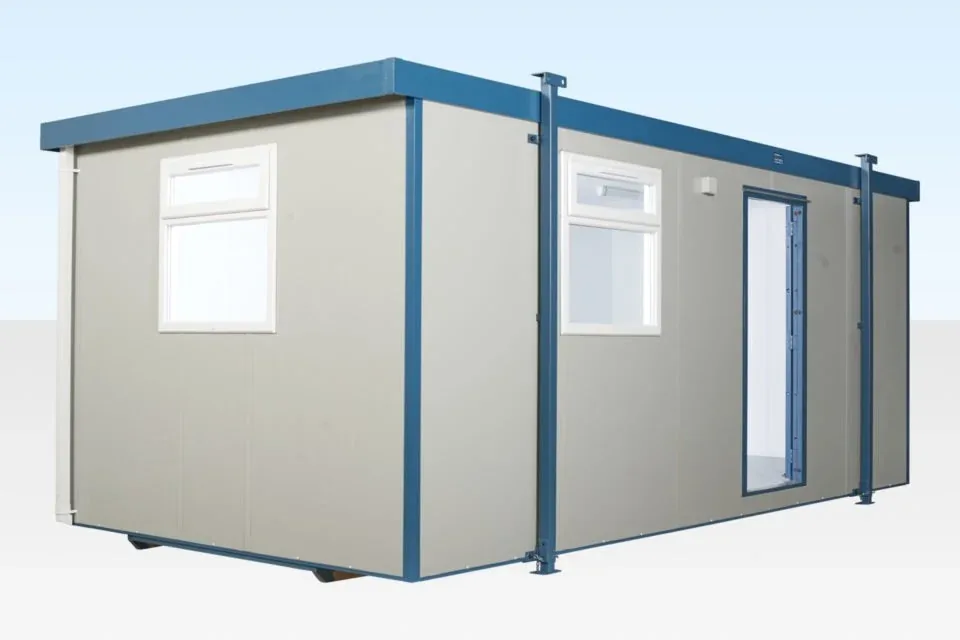
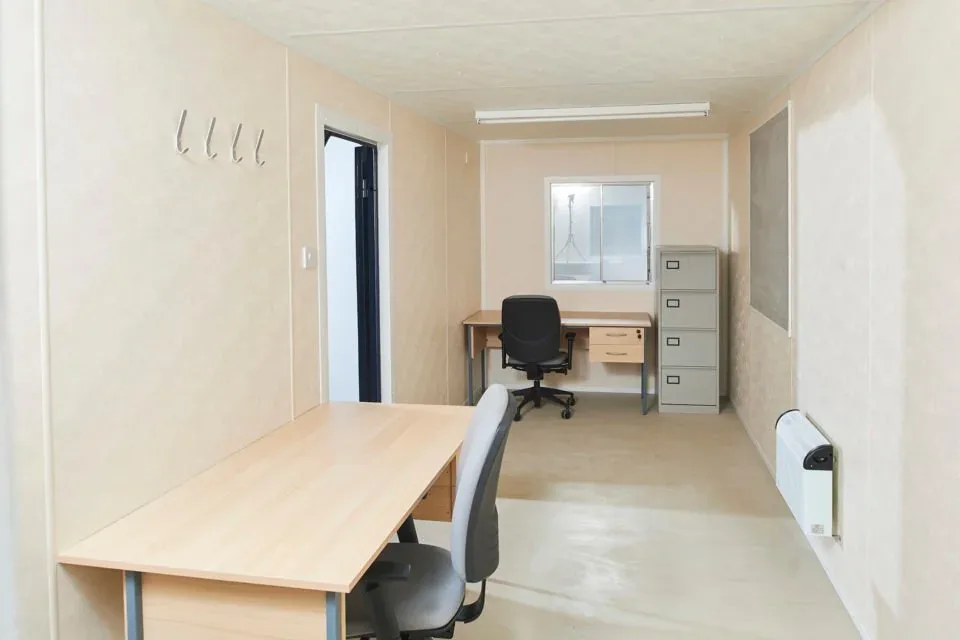
The office is the first cabin most sites buy and the one that gets undersized. A 12 ft x 8 ft steel anti-vandal office is a one- or two-person cabin: a desk, a chair, drawings on the wall and a filing cabinet. Step up to 16 ft x 8 ft and you can put two desks in without the second person working around the first one's chair. The 20 ft x 8 ft anti-vandal office is the one to look at when a site manager, a supervisor and a plans table all have to live in the same room.
The jackleg cabins run in the same lengths at a wider footprint — 10 ft x 10 ft, 16 ft x 10 ft and 20 ft x 10 ft site office jackleg cabins. The extra width is what you notice when there are two rows of desks or a big format drawing table. Jackleg cabins take their name from the jacking legs they stand on, which lets you set them down and level them on ground that is not perfectly flat.
If the site is unattended overnight, or the cabin is going somewhere the public walks past, look at the anti-vandal steel cabins rather than a lighter unit. They are built as steel boxes with the openings protected, which is why they are the standard choice on construction sites and in yards.
Crib room or canteen: a place to sit down and eat
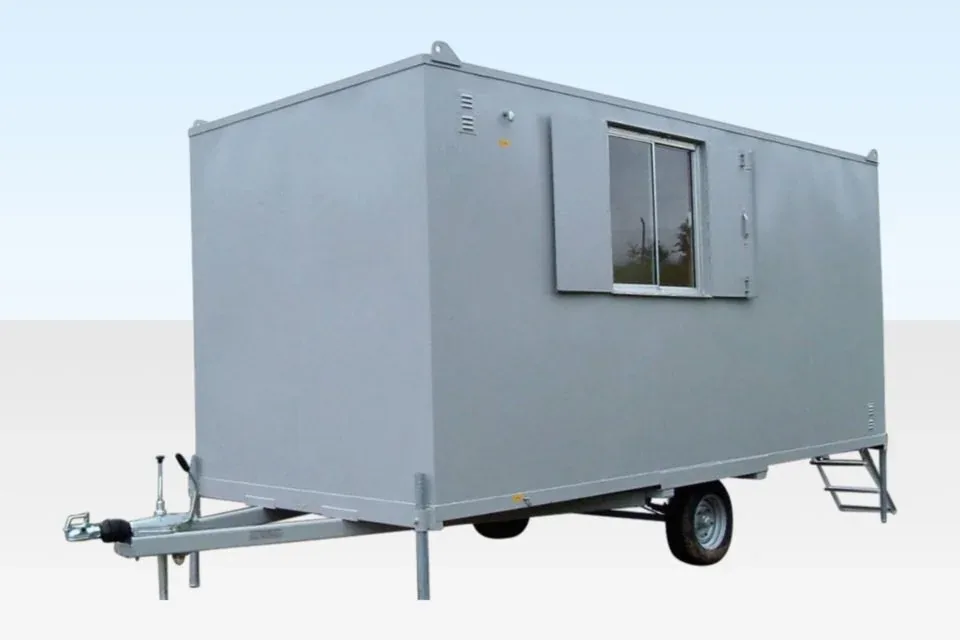
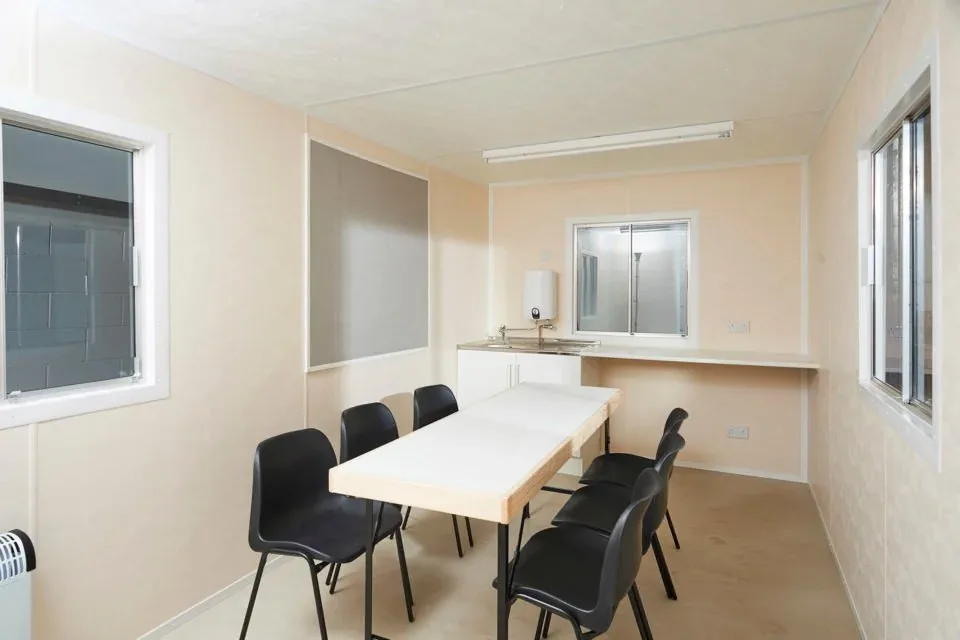
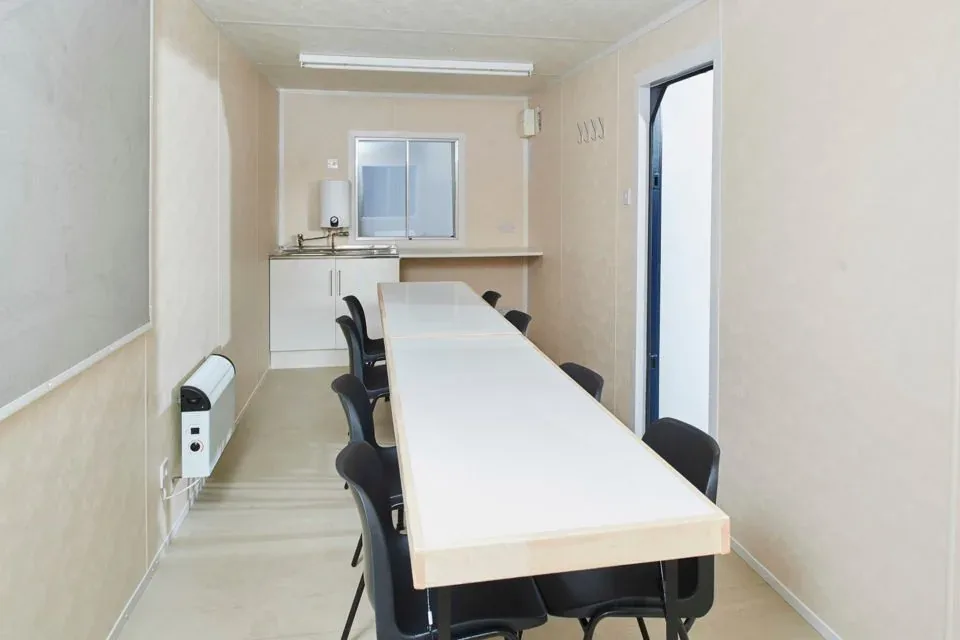
A crib room is not a bigger office with a kettle in it. It needs table and bench space for the crew at the same time, somewhere to stack lunch boxes, and enough room to walk past someone seated. The range runs from a 12 ft x 8 ft steel anti-vandal canteen cabin, through 16 ft x 8 ft and 20 ft x 8 ft, up to a 20 ft x 7 ft 6 in mobile canteen cabin.
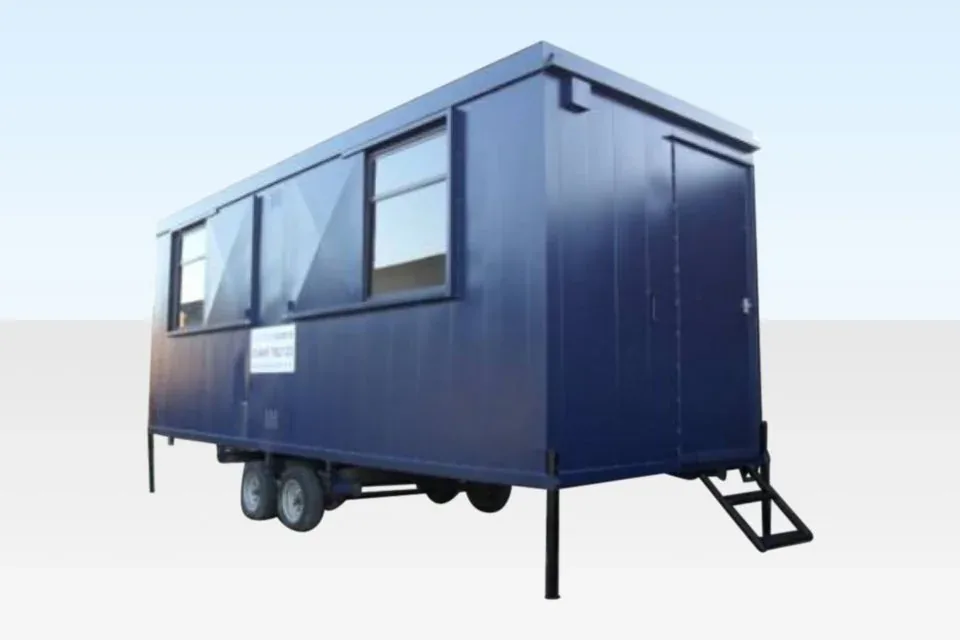
If the cabin has to move between jobs, the mobile canteen units are the ones built to be towed. There are also used mobile canteen units in the range — a sensible way to get a crib room on a farm or a fixed yard where the cabin stays put and the finish does not matter.
Count bodies, not square metres. Twelve people on a smoko break all want a seat at once, and a cabin that seats eight has three people eating standing up in the doorway by the second week.
Toilet cabins: match the toilet to the connection
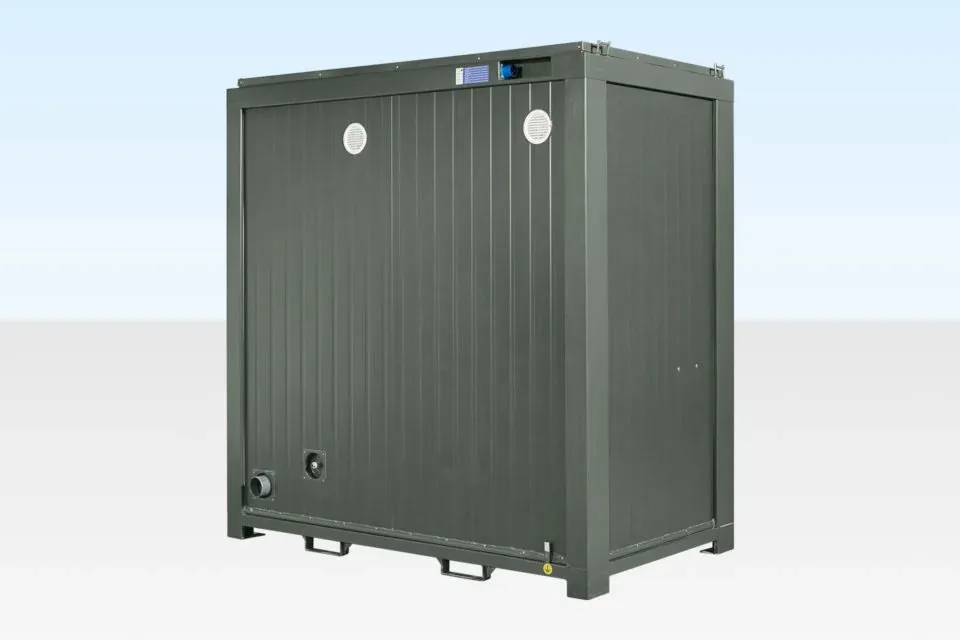
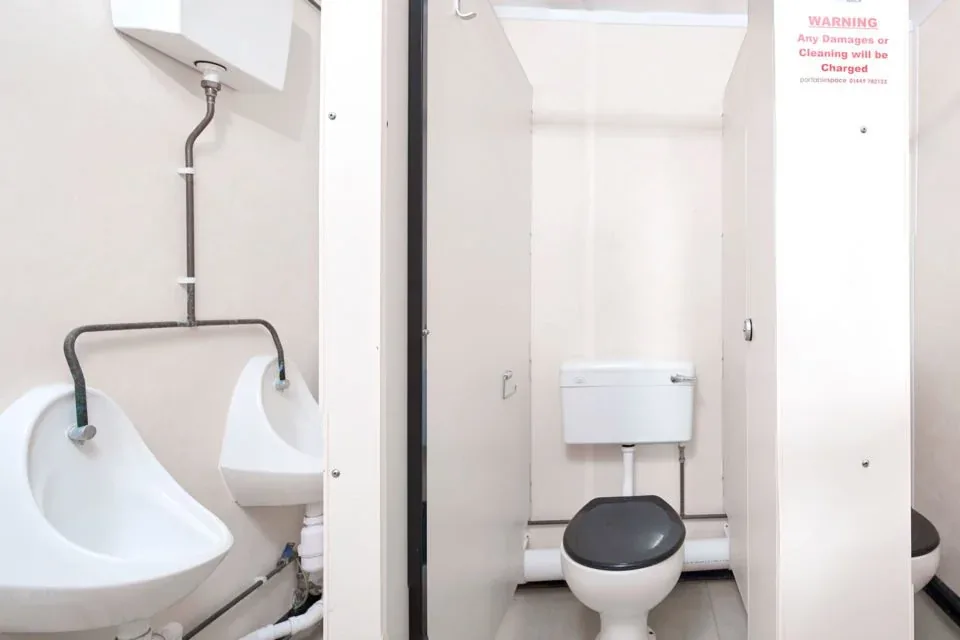
The first question on a toilet cabin is not size, it is what is under it. A mains toilet cabin connects to a sewer or a treatment point. A cabin without that connection needs a waste tank, which is where the sit-on tanks come in — 4,800 litre and 6,500 litre — taking the waste from under the cabin until it is pumped out. Tell us the cabin and the site and we will line up the tank with the unit rather than leave you to work it out.
Sizes in the range:
- 1+1 double mains toilet — 8 ft x 5 ft, one male and one female pan. The smallest practical option for a small crew or a farm.
- 2+1 steel toilet cabin — 12 ft x 9 ft, two pans plus one.
- 3+1 steel toilet cabin — 16 ft x 9 ft, for a bigger crew or a site with visitors.
- 12 ft x 9 ft 2+1 jackleg toilet cabin — the same 2+1 layout on jacking legs, for ground you need to level.
On a site with a mix of trades, or one where women are on the crew, the 2+1 and 3+1 layouts stop the queue that a single-pan unit creates at 6.30 in the morning.
Drying rooms: the cabin people forget until winter
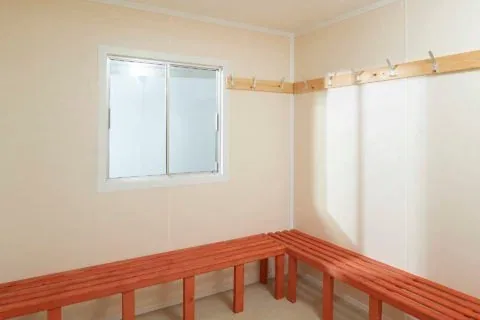
A drying room is where wet boots, oilskins and high-vis go at the end of the shift so they are wearable at the start of the next one. We carry them in 12 ft x 8 ft and 16 ft x 8 ft steel cabins. On a farm, a civil job or anything running through a Victorian or Tasmanian winter, it pays for itself against lost time and against crew members working wet.
Related units in the same family: a 12 ft x 8 ft steel store cabin built so it can be stacked — useful when the yard is tight and you want storage above or beside the office — and a 2.3 m x 2.3 m flat packed office cabin for a small site hut that can be moved without a crane.
How the cabin gets onto your ground
Cabins come out of the yard on a flat-top and are placed by crane or Hiab. That is different from a shipping container, which can arrive on a tilt-tray and slide off. A cabin lifted by crane needs the truck to stand somewhere it can set up, and the crane needs a clear swing over the drop point. A Hiab does the same job off the back of the truck with less room to work in, which suits tight yards, driveways and farm tracks.
Before the truck leaves, we need to know:
- Access width and height — gateways, carports, low branches, power lines over the driveway.
- Ground — firm and level where the cabin sits and where the truck stands. Soft ground after rain is the most common reason a lift has to be rebooked.
- The drop point — where the cabin actually lands, and whether anything has to be moved to get the crane or the cabin into that spot.
- Level — for a jackleg cabin, straight and level so the legs can take the load properly rather than one corner sitting in a hole.
If you are unsure, send photos of the access and the drop point and we will tell you what will get in and what will not before you pay. More on how the different trucks work is in Tilt-Tray or Side-Loader: Which Truck Suits Your Site.
Delivery is free, anywhere in Australia
Delivery on a cabin is free to any address in Australia — metro, regional or remote — and the freight is already in the listed price, not added at the invoice stage. Collection from the Melbourne yard is free as well if you would rather bring it home yourself.
Dispatch is 2 to 5 business days after payment clears. After that, the published transit windows are:
| Where it is going | Business days after dispatch |
|---|---|
| Melbourne, Sydney, Brisbane, Adelaide, Canberra metro | 2 to 7 |
| Regional VIC, NSW, QLD and SA | 4 to 10 (longer where a crane or escort is required) |
| Perth, Darwin, Hobart | 7 to 15 (Tasmania includes the Bass Strait crossing) |
| Remote and unsealed-access sites in WA, NT, QLD and SA | 10 to 21, confirmed case by case |
The full detail is on the delivery page.
Ordering a cabin
Nothing is charged on the website. You check out or request a quote, and we send an invoice by email. You pay by bank transfer (EFT), PayID or a card payment link — the payment page sets out how each works. Once the money clears the cabin is booked for dispatch, and delivery or collection is arranged with you.
Every cabin listing shows real photos of the unit and a GST-inclusive price in Australian dollars. Returns are 30 days for change of mind, and any damage or fault needs to be reported within 48 hours of delivery — see the returns policy.
If you are weighing up a cabin against a modified container for the same job, the cabins and modified containers range covers both, and the modified container listings show what a container fit-out looks like. For a small hut that ships flat and goes up without a crane, start with the flat pack range.