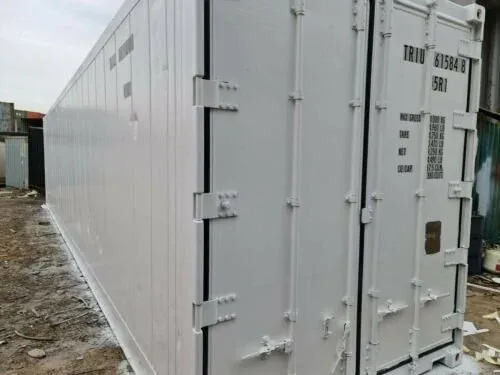
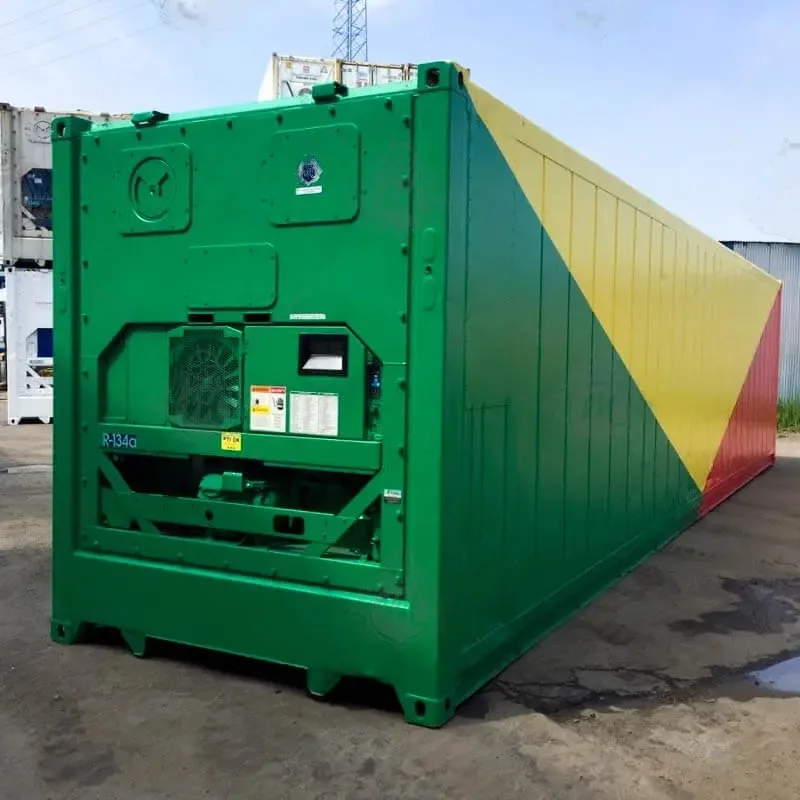
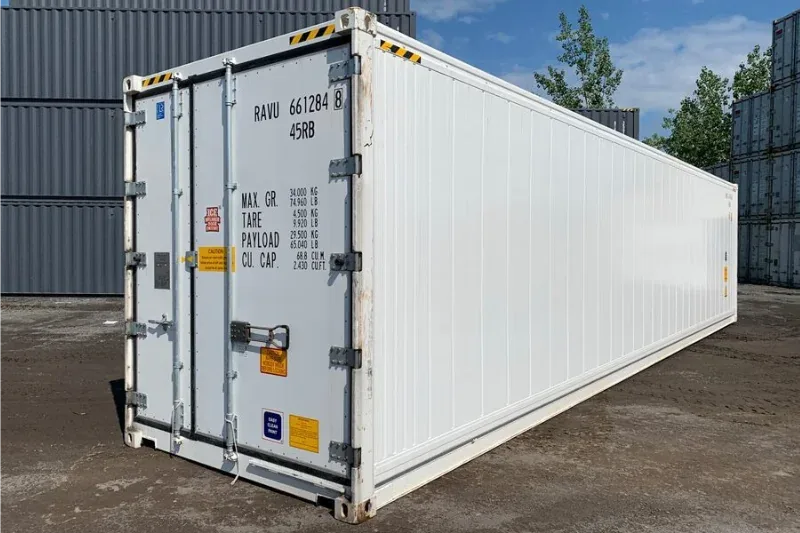
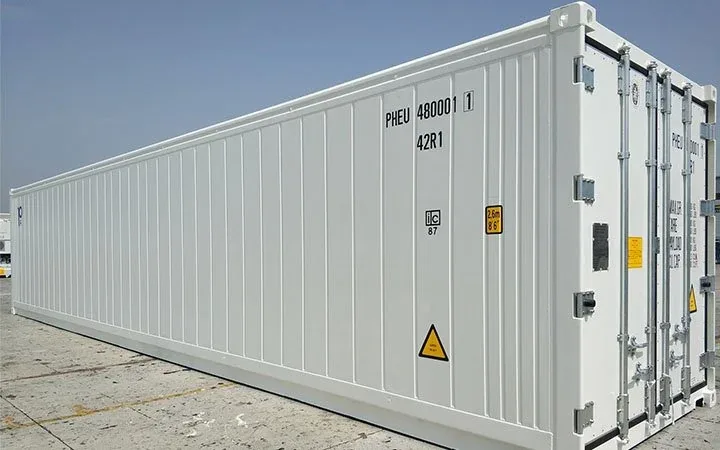
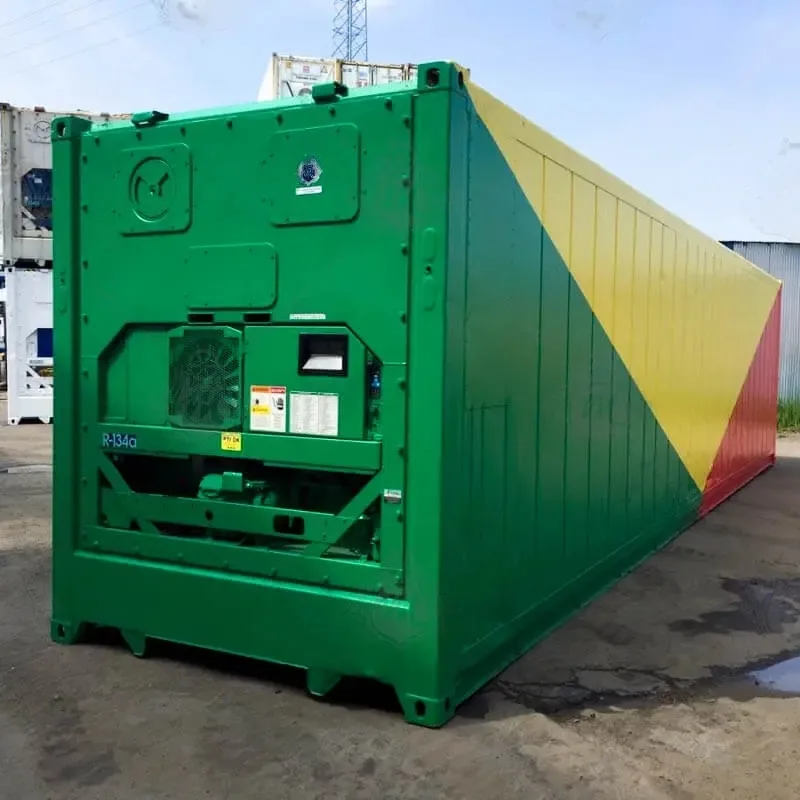
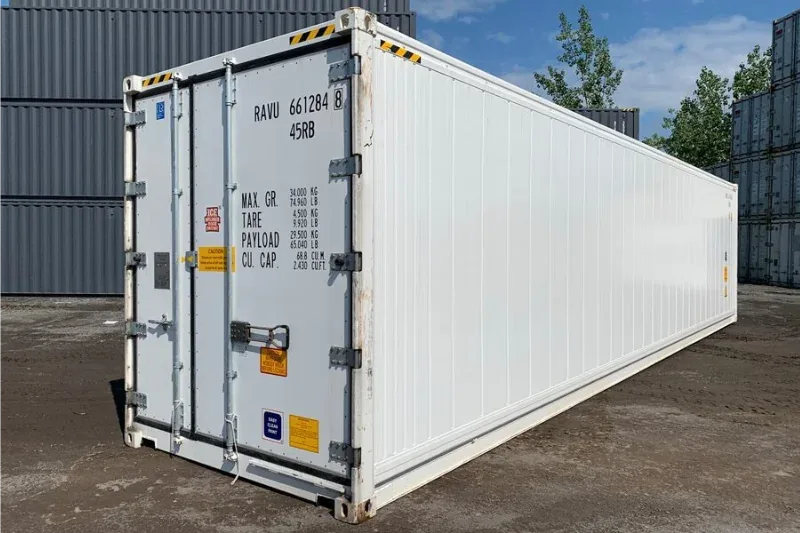
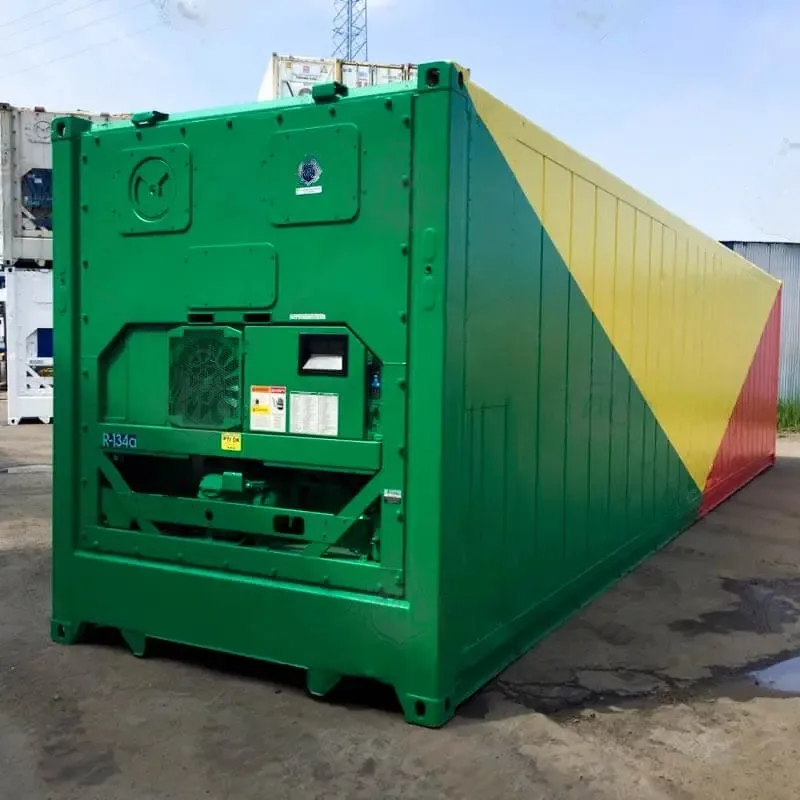
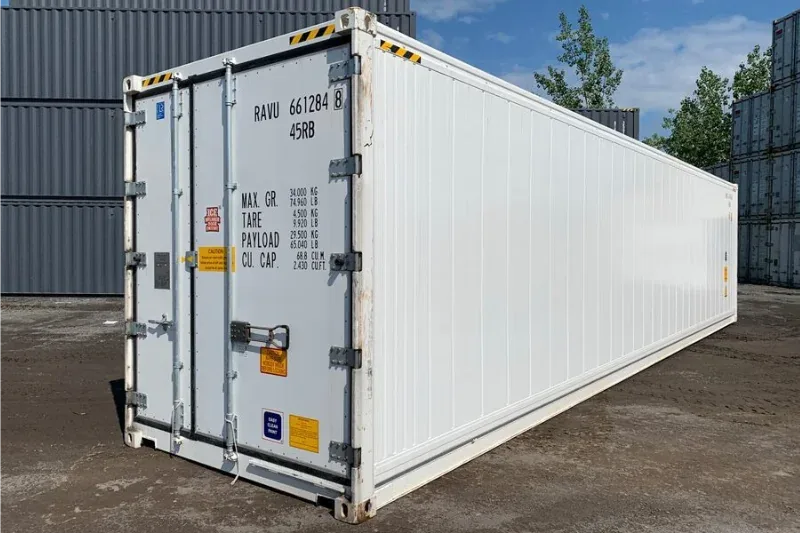
 40ft High Cube One-Trip ISO Reefer Container — tap to view
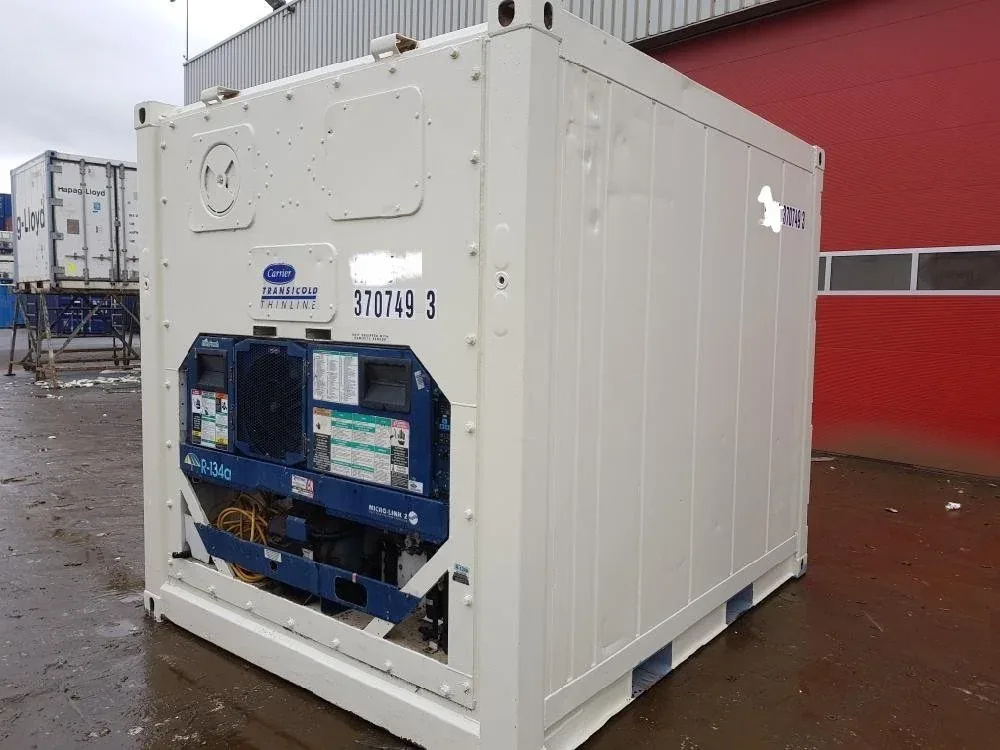
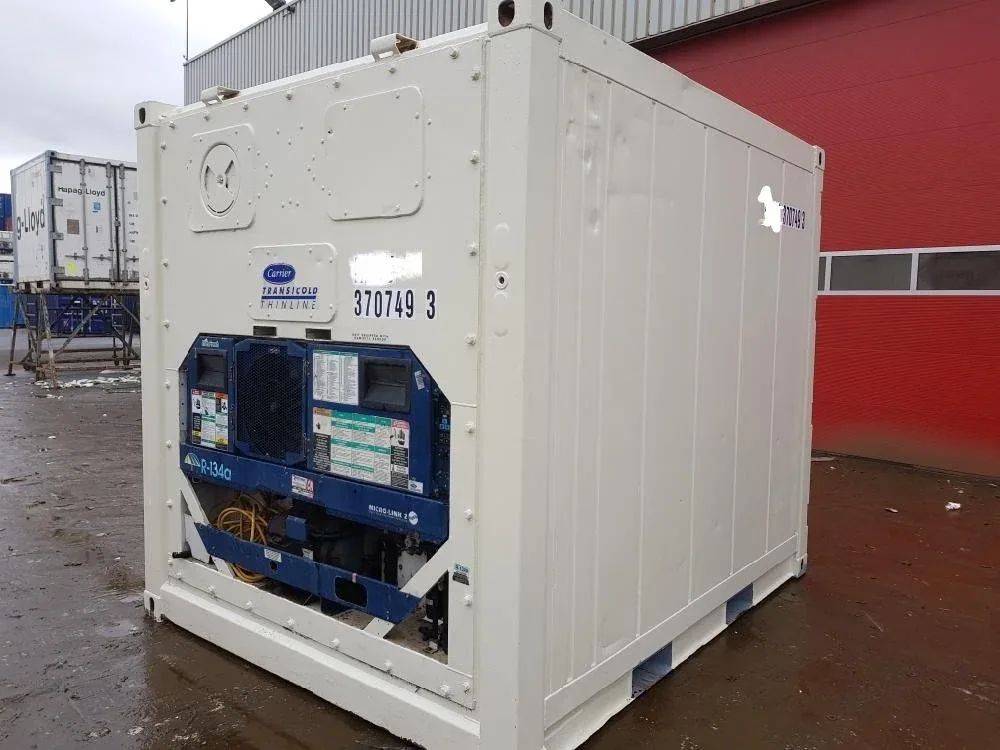 10ft Used Reefer Shipping Container – White — tap to view
What a reefer actually is
A refrigerated container — a reefer — is an insulated shipping container with a refrigeration unit bolted to the front end. Compressor, condenser and controller are all in that one box. Plug it in, set a temperature, and it holds it. Because it is built to be lifted and shipped, it can be dropped on a gravel pad behind a packhouse or in a car park behind a restaurant and run from there, which is why farms, caterers, butchers and food wholesalers use them as overflow cold storage or as the only cold storage they have.
It is not a cool room and it is not a freezer cabinet. It is a sealed, insulated box with a machine on the end, and how well it suits your job depends on four things: length, grade, power and placement.
Choosing the length: 10, 20, 40 or 45 ft
Reefers are sold here in four lengths, and the machine end is the same on all of them — what changes is how much you can put inside.
- 10 ft — for tight sites and small volumes: a market garden stall, a café, a butcher's overflow, a farm kitchen. Easy to place where a 20 ft will not fit, and the cheapest way into refrigerated storage.
- 20 ft — the common choice for a small food business or a farm. Fits a row of standard pallets down each side, and it is the size most people picture when they say cold room.
- 40 ft and 40 ft high cube — for volume. High cube gives you the extra height for stacked pallets or tall racking. This is the packhouse and wholesale size.
- 45 ft — the biggest single unit sold here, and the one to check access for. Longer container, longer truck, more room needed at the drop point.
Within those lengths the listings also cover the specialist machines: a 20 ft dual temperature ISO container that runs two zones, blast freezers rated down to −40°C for pulling heat out of fresh product, and deep freezers to −60°C for long-term frozen storage. If your job is freezing rather than chilling, buy the freezer unit — a standard reefer asked to hold −30°C is working outside what it was built for.
New, one-trip or used
New one-trip means the unit has made one voyage and the machinery is essentially fresh. Used cargo-worthy means it has worked, is structurally sound and is graded as such on the listing. For a reefer, the grade matters more than on a dry container, because you are buying a machine as well as a box. The general run-through of grades is in new, one-trip or used containers; on a reefer, add these checks:
- Compressor hours — read them off the controller. Hours tell you how hard the machine has worked.
- Door gaskets — perished seals let warm, humid air in and the unit runs flat out trying to keep up.
- The floor — reefer floors are ribbed aluminium over insulation. Dents and crushed ribs are where cold leaks out.
- The controller and refrigerant — the data plate and the controller tell you what gas it runs and what range it was set for. If a unit has been converted, ask what to.
Used reefers are priced lower and are the sensible buy for seasonal or overflow storage. A new one-trip unit is the sensible buy if it is going to run every day of the year and the contents are worth more than the container.
Power is the part that catches people out
A reefer is only a cold room while it has power, and the power has to be right. Every unit has a data plate stating its voltage and phase, and the freezer listings here show it plainly — for example 460V/230V 3P on the blast freezer and deep freezer units. Before you commit, get a licensed electrician to read the data plate of the exact unit and confirm your supply matches it. Then have the circuit and a weatherproof outlet run to where the container will actually sit, not to the shed forty metres away.
Two practical points. First, plug in and let the unit pull down to temperature before you load it — loading a warm box with warm product is how a reefer ends up running all night. Second, if there is no power at the site at all, say so when you enquire: the 40 ft deep freezer listing includes a generator, and for anything else ask about running a genset rather than assuming an extension lead will do.
Where it goes on your site
Firm, level ground is the starting point — a compacted gravel pad, a concrete slab or bearers on solid footing. What to put a shipping container on covers pads, bearers and drainage properly.
Then leave the machinery end alone. The condenser is air-cooled and needs air moving across it, so do not back the unit into a fence, a hay shed, a wall or a stack of pallets. Give it clear space on the machine end and you will get a quieter, longer-lived unit. Leave room at the doors too — you want them to open fully with a pallet trolley in front of them, not swing into your parking bay.
Getting it onto the site
Reefers arrive on a tilt-tray or a side-loader. A tilt-tray needs roughly twice the container length in straight, clear space plus room to manoeuvre; a side-loader needs a clear strip alongside the drop point and does not need the truck to reverse the length of your yard. Which one suits your site is set out in tilt-tray or side-loader.
A reefer is heavier than a dry container of the same length — there is a refrigeration plant and a lot of insulation in it — so rather than guess, tell us which unit you are looking at and we will confirm the truck and the lifting plan for your address. If access is tight, sloping or unsealed, say so at the quote stage, not on the morning of delivery.
Delivery is free anywhere in Australia
Delivery is free to any address in Australia — metro, regional or remote. The freight is already in the listed price and nothing is added to the invoice, so the price you see on the listing is the price landed at your gate. Collection from the Melbourne yard is free too, if you would rather arrange your own transport.
Dispatch is 2–5 business days after payment clears. Published transit after dispatch: Melbourne, Sydney, Brisbane, Adelaide and Canberra metro 2–7 business days; regional VIC, NSW, QLD and SA 4–10; Perth, Darwin and Hobart 7–15, with Tasmania including the Bass Strait crossing; remote and unsealed-access sites in WA, NT, QLD and SA 10–21, confirmed case by case. The full detail is on the delivery page.
Nothing is charged on the website. Checkout or a quote request returns an emailed invoice, paid by EFT, PayID or an emailed card link — see payment methods. Damage or faults are reported within 48 hours of delivery, and there is a 30-day change-of-mind return.
Looking after it once it is running
Three things keep a used reefer alive. Keep the condenser clean — dust, pollen, grass seed and chaff block the fins and the unit works harder for the same result, which matters on a farm or near a hay shed. Check the door seals each season. And leave the defrost cycle alone; it is doing a job.
Watch condensation. Every time you open the doors on a humid day you pull moist air into a cold box, and it ends up as ice on the evaporator or water on the floor. Stopping container condensation covers the why and the fixes. Keep the doors shut, open them for a reason, and do not store cardboard on the floor where it will wick moisture.
When a reefer is the wrong buy
If the goods only need to be out of the weather — machinery, tools, feed, fencing, a site store — a standard 20 ft container does the job for a fraction of the money and has nothing to service. If what you need is a place for people rather than product, that is a site cabin, not a reefer. Reefers are for things that have to stay cold.
The full range, with real photos and GST-inclusive prices, is in refrigerated containers.